
How to improve security in residential buildings: the 2026 operator guide
A practical, layered playbook for improving security in UK residential buildings — covering access control, courier and visitor management, CCTV, concierge protocols, fire-door discipline and the resident behaviours that quietly create the biggest risks.
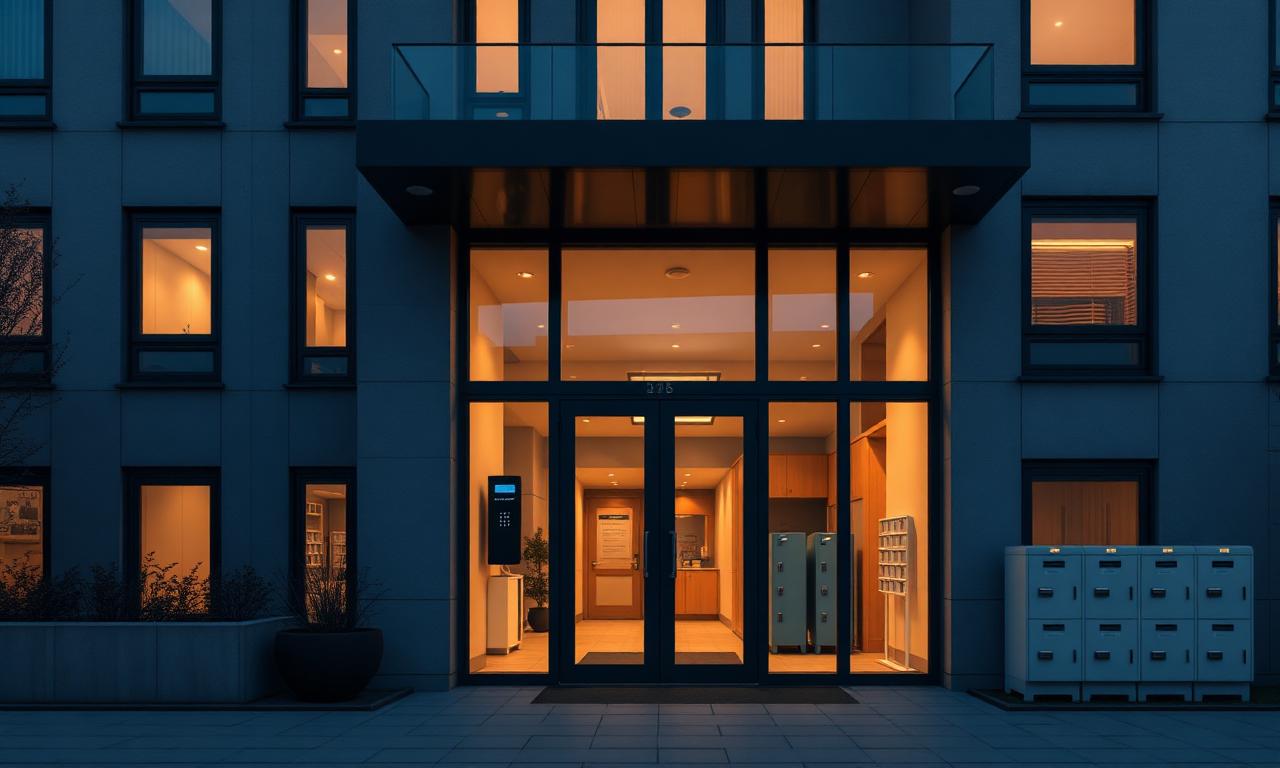
Security in UK residential buildings — apartment blocks, Build-to-Rent, co-living, PBSA and leasehold — has quietly become a multi-layer operating problem. It is no longer just locks, fobs and CCTV. It is access control, courier flow, visitor management, fire-door discipline, lone-resident risk at 11pm, contractor access and the Building Safety Act sitting over the top of all of it.
This is the practical 2026 playbook the leading UK operators are using to improve security in residential buildings — what to layer, in what order, and where the highest-impact, lowest-cost wins sit.
1. Start with the perimeter, not the front door
Most residential building security incidents do not start at a forced front door. They start with someone walking in behind a resident, a food courier propping a fire door, or a stranger waiting in the lobby for an opportunity. The single biggest perimeter win in a UK apartment block in 2026 is removing the reason non-residents need to enter at all.
That means: a perimeter-accessible food and grocery delivery handover point so couriers never need internal access; a clear visitor protocol with pre-authorised codes; and contractor access via timed, logged credentials rather than a 'just let them in' intercom culture.
- Perimeter smart food lockers — heated, ambient and chilled — for food, grocery and meal-kit handover; couriers drop outside, residents collect from inside
- Pre-authorised visitor PINs valid for a defined window, not open-ended fob handouts
- Contractor access via timed credentials with full audit trail
- Clear external signage so couriers and visitors never need to buzz a random flat for directions
2. Upgrade access control: smart locks, audit trails, zoned credentials
Mechanical fobs and shared codes are the weakest link in most UK residential buildings. They cannot be revoked instantly, they do not log who entered, and they get duplicated. Smart access control — mobile credentials, PIN, or biometric backed by a cloud audit log — is now the baseline expectation in premium BTR and PBSA, and the fastest single security upgrade for older blocks.
- Mobile credentials per resident, revocable instantly when a tenancy ends
- Zoned access — residents can reach their floor, amenities and bin store; not the entire building
- Full audit log of every entry by credential, door and timestamp
- Anti-passback rules at the main entrance to deter tailgating
3. Solve the food courier problem — the #1 unforced security failure
Across UK operator interviews, the single most common cause of avoidable security incidents in residential buildings is unmanaged food, grocery and meal-kit courier access. Propped fire doors. Tailgating. Strangers in corridors. Lone residents opening their door to a stranger in a hi-vis jacket at 11pm. Most blocks were never specified for the volume of Deliveroo, Uber Eats, Just Eat, Tesco Whoosh, Gorillas and HelloFresh traffic they now receive.
The fix is structural, not behavioural: take the courier interaction out of the building entirely. Perimeter-accessible smart food lockers act as the official delivery address on every major platform. Couriers drop at the perimeter, residents collect via PIN, and the courier never needs to enter the building.
This single change typically removes 70–85% of non-resident foot traffic from the lobby. Read why unvetted food couriers are the biggest residential security risk in 2026.
4. Visitor management that actually gets used
Most residential visitor policies fail because they add friction for residents. A good 2026 visitor system makes it easier for the resident to pre-authorise a friend than to buzz them in — typically through the same resident app that handles food deliveries and amenities. PIN expires automatically, entry is logged against the host resident, and the front-of-house team can see who is in the building at any time.
5. CCTV that records the right things in the right places
Most UK apartment buildings have CCTV. Fewer have CCTV positioned, retained and reviewed properly. The five high-value coverage zones are: external approach to the main entrance, the entrance lobby (including the mat and the intercom), the food locker handover area, the ground-floor lift lobby, and the bin store. Retention of 30+ days is now the de-facto standard for BTR; PBSA typically runs 60+.
- Cover the approach, not just the doorway — incidents start outside the building
- Camera the food and grocery locker handover zone end-to-end
- Position cameras at face height, not ceiling angle, in the lobby
- Document a written CCTV policy and signpost it in the lobby — GDPR-compliant and incident-defensible
6. Fix the fire-door problem before it fixes you
62% of UK apartment buildings log at least one propped fire door per week — overwhelmingly caused by food couriers and contractors. Under the Building Safety Act 2022, repeated propped fire doors in a higher-risk building are an Accountable Person issue, not a maintenance issue. Door-monitoring sensors that alert front-of-house when a door is held open beyond 30 seconds are now standard kit in serious schemes.
See the full Building Safety Act guide for how this maps to Accountable Person duties.
7. Protect the lone resident — the highest-risk persona
The persona most exposed to a residential security incident in the UK in 2026 is the lone resident — often a young professional or student — opening their flat door at 22:00–02:00 to a stranger in food-courier clothing they have never met. This pattern is responsible for the majority of distraction burglaries, theft and personal-safety incidents in apartment buildings.
Three structural fixes:
- Food lockers, not door-to-door, for all late-night Deliveroo, Uber Eats and Just Eat orders
- Intercom rules that disable courier door-release between 23:00 and 07:00
- Written delivery policy in the resident handbook so the expectation is set on day one of tenancy
8. Concierge as a security asset, not a delivery sink
Concierge teams are the single most expensive security asset in most UK residential buildings — and 30–45% of their day is currently spent triaging food and grocery deliveries rather than watching the lobby, screening visitors and responding to residents. Routing food, grocery and meal-kit deliveries through the locker layer reclaims that time back to actual security work without adding headcount.
See the full concierge cost breakdown for how this trade-off lands financially.
9. Grocery and meal-kit drops — the new evening security pressure
Tesco Whoosh, Sainsbury's Chop Chop, Gorillas, Getir, Gousto, HelloFresh and Mindful Chef have added a second wave of evening courier traffic on top of food delivery. These are larger bags, longer dwell times and more frequent re-entry — and they hit at exactly the same window that residents are returning home. Chilled smart-locker compartments take the entire workflow off the lobby and out of the lift.
See how grocery lockers work in apartments and how meal-kit subscriptions like HelloFresh are handled.
10. Residents — the security layer most operators ignore
No amount of hardware fixes a culture of holding the front door open for strangers. The buildings with the lowest incident rates all do the same three things on day one of every tenancy: a written security and food delivery policy in the resident handbook, a short induction on tailgating and door-holding, and a clear, friendly tone-of-voice from the front-of-house team. Security is a team sport — residents have to play.
The 2026 residential security stack — what 'good' looks like
The leading UK BTR, PBSA, co-living and premium leasehold operators are converging on the same security stack:
- Smart, zoned, audit-logged access control with mobile credentials
- Perimeter-accessible smart food, grocery and meal-kit lockers — removing the courier from the building
- App-based pre-authorised visitor PINs
- Door-monitoring sensors with alerting on propped fire doors
- 30–60 day CCTV retention with the five high-value zones covered
- Concierge re-focused from food delivery triage to actual front-of-house security
- Written, resident-facing security and food delivery policy in the handbook
- Building Safety Act-aligned incident logging for higher-risk buildings
This is the architecture that turns a residential building from a series of unmanaged front doors into a layered, defensible operating environment. Book a 15-minute demo to see how Foodie Locker fits into the stack.