
Food delivery management for apartment buildings: a 2026 playbook
Food delivery is now the #1 lobby pressure in residential buildings. This playbook covers how operators automate the chaos with smart food locker infrastructure.
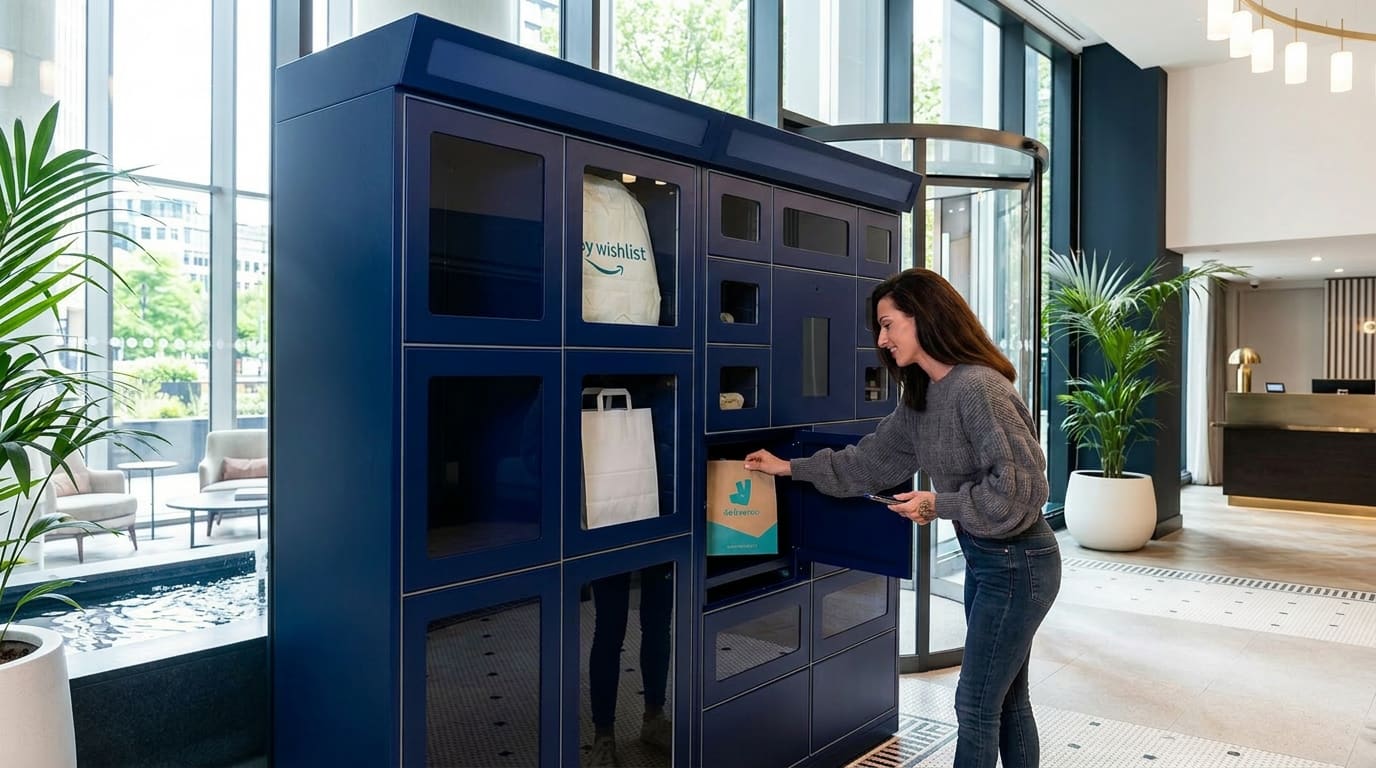
Food delivery is now the #1 lobby pressure in residential buildings. This playbook covers how operators automate the chaos with smart food locker infrastructure — from peak-hour planning to courier policy to KPIs.
Map your delivery profile
Start by measuring delivery volume per resident per week, peak-hour distribution, courier mix and average dwell time. Most BTR and PBSA buildings see 2–3 food deliveries per resident per week, with 60% concentrated between 6pm–9pm.
Right-size your locker stack
A typical apartment building needs roughly one food locker compartment per 5–8 residents to absorb peak loads without queueing. Mix insulated compartments based on order type ratios.
Set courier policy
Whitelist trusted courier platforms, define operating hours, blackout windows and verification rules. Foodie Locker enforces every policy at the locker itself — no front-desk policing required.
Measure what matters
- Utilisation rate per compartment type
- Average dwell time per delivery
- Forgotten-collection rate
- Front-desk hours recovered per week
- Resident satisfaction (post-collection NPS)