Built for buildings
where residents order.
Millennials and Gen Z don't cook the way previous generations did. Food delivery is daily, and in some sectors hourly. Foodie Locker is engineered for the operational reality of how people actually live, study and work today.
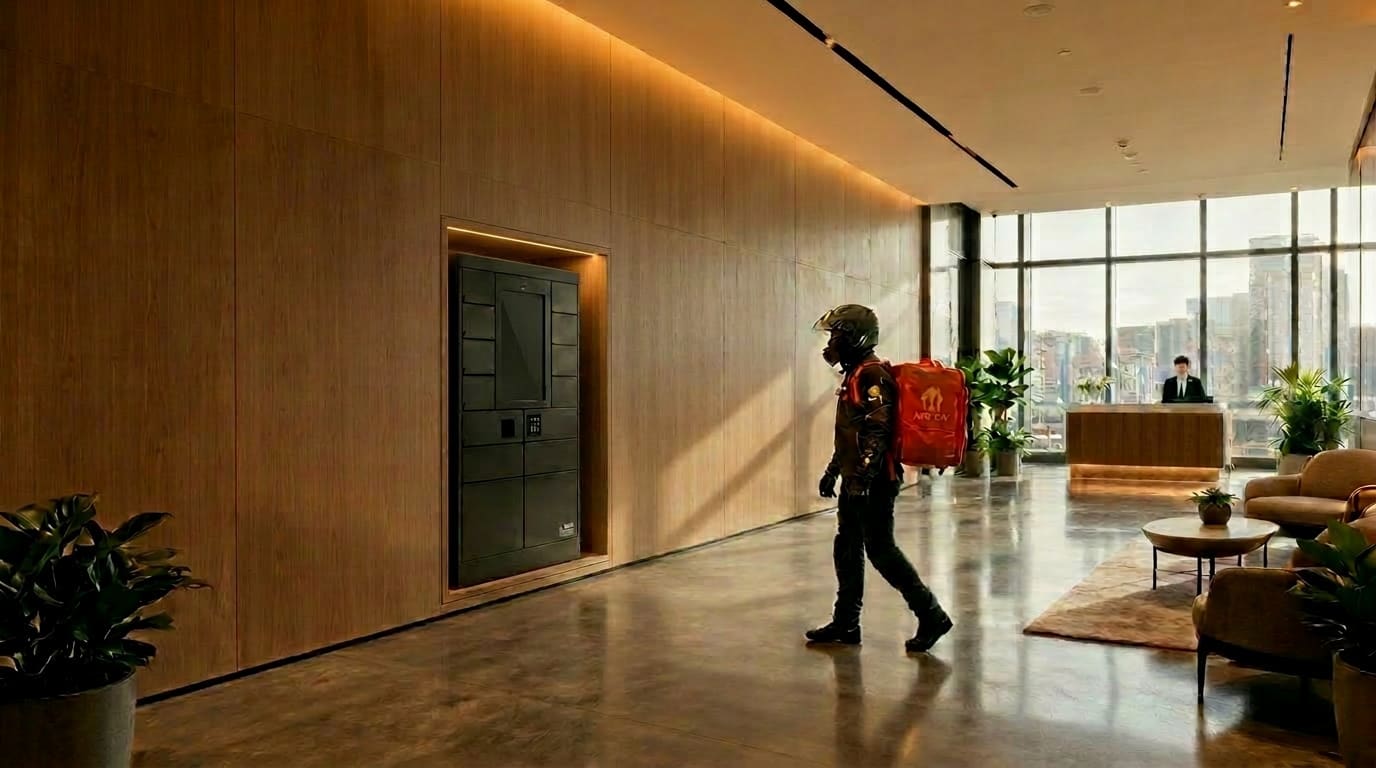
Premium living, frictionless food
BTR residents skew toward millennials and young professionals who use food delivery as a regular part of the week — typically 2–3 orders per resident. They expect the same convenience at home that they get from premium retail, and they judge a building on the small moments, like whether their dinner arrives hot.
The challenges today
- High order frequency
Residents order food multiple times a week. Lobbies fill with bags, concierge teams play receptionist for Deliveroo.
- Mix-ups & cold food
Couriers leave bags on the floor or hand them to the wrong person. Complaints land at the front desk.
- Concierge bottleneck
Hours per day spent receiving, sorting and reuniting residents with food orders.

How Foodie Locker innovates
- Premium experience
Insulated lockers protect food until residents collect on their schedule, not the courier's.
- Operational lift
Front-of-house gets hours back every day to focus on the experience that actually drives renewals.
- Zero anonymous handoffs
Couriers never need to meet residents. No buzzers, no lobby waits, no awkward exchanges.
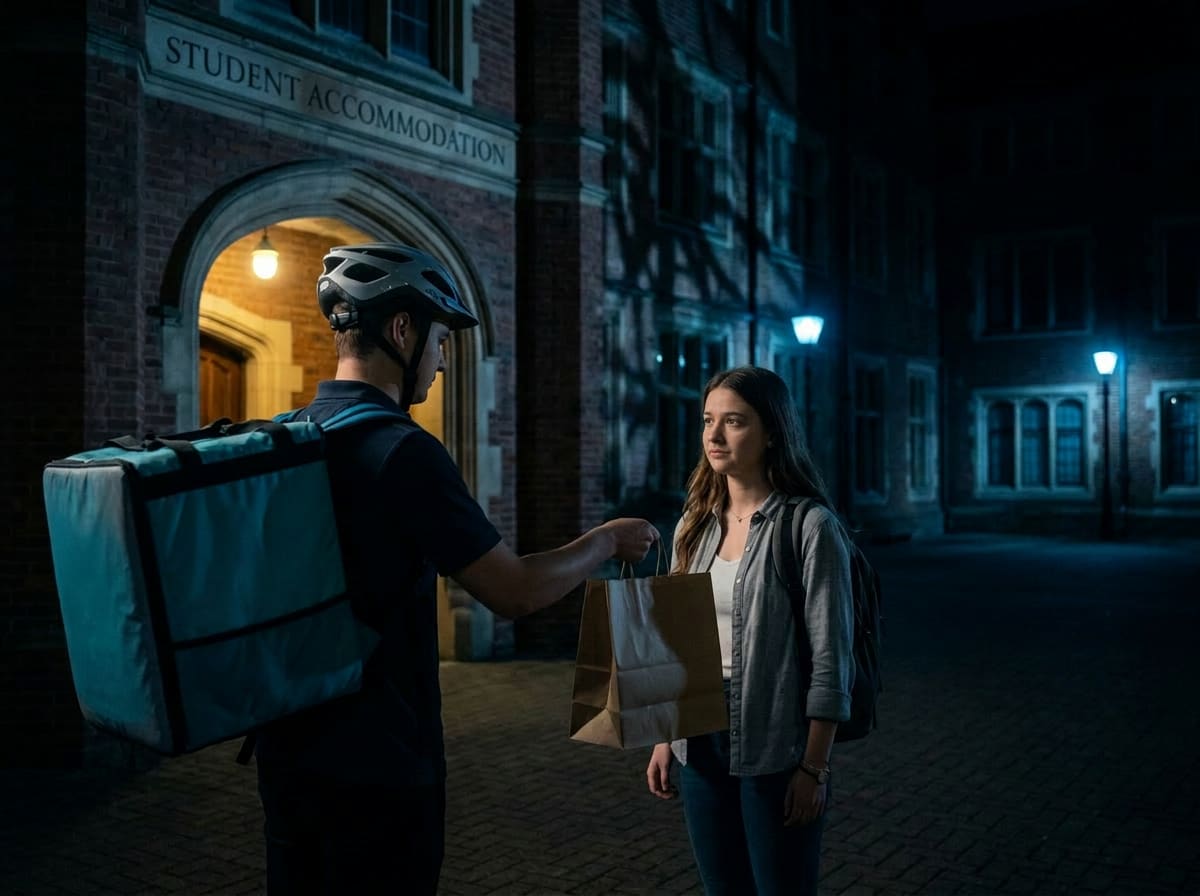
High volume, late nights, zero chaos
Students are among the heaviest food-delivery users — particularly during exam periods and on weekend nights. Orders cluster late, often after 10pm, putting real pressure on reception, on safety, and on the lobby in ways no other sector matches.
The challenges today
- Order surges
Friday and Saturday nights see hundreds of deliveries land in a 3-hour window. Lobbies become courier waiting rooms.
- Late-night safety
Lone students — often young women — meeting unknown couriers in dark entrances or external doors at 11pm and beyond.
- Anonymous handoffs
Couriers buzzing repeatedly, residents propping doors open, strangers entering the building unaccompanied.
How Foodie Locker innovates
- Safety by design
Couriers drop into a secure locker outside the building. Residents collect from inside, in their own time, in a lit, monitored space.
- No door propping
External-access lockers mean couriers never enter the building. Building security stays intact, 24/7.
- Built for volume
100+ compartments absorb peak Friday-night surges without a single concierge intervention.
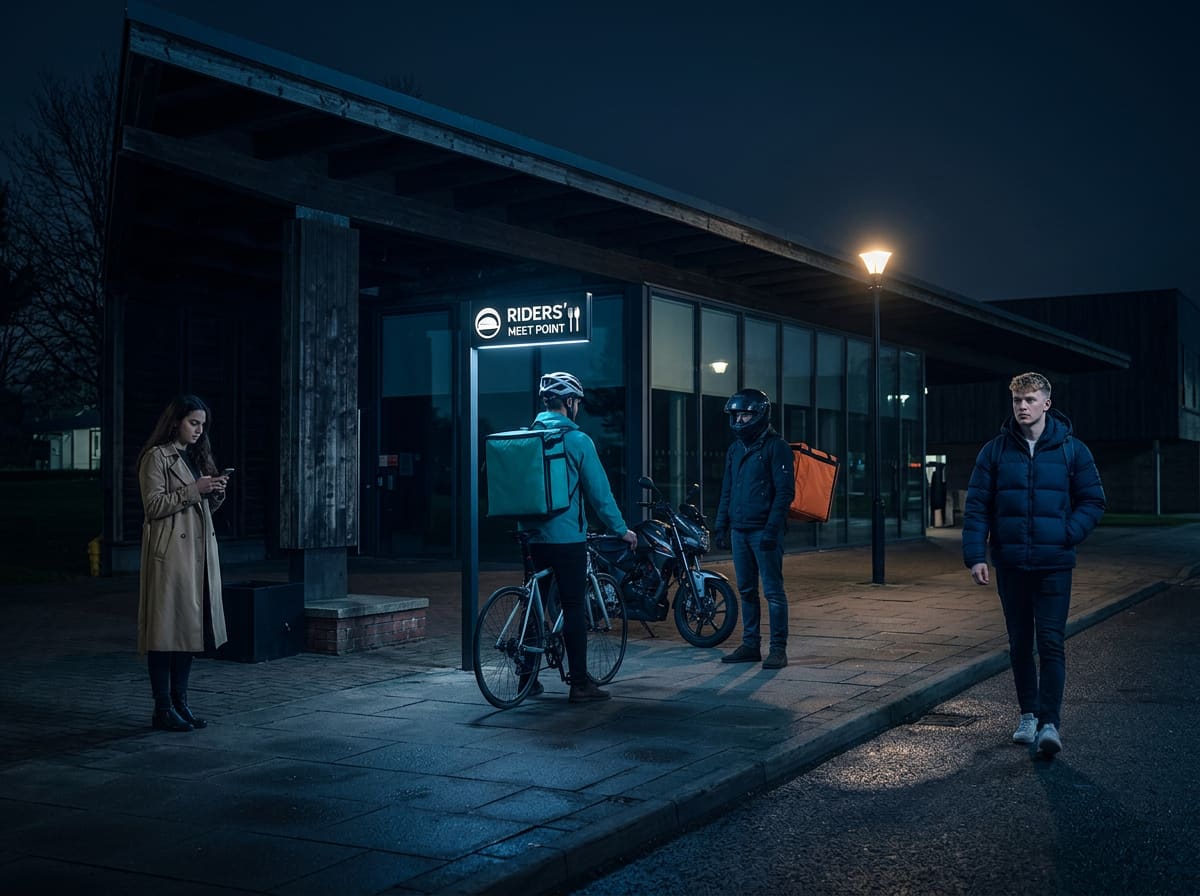
Designated pickup points across campus
University campuses — both on-site halls of residence and nearby off-campus accommodation blocks — face a unique delivery problem at scale. Couriers struggle to navigate sprawling estates, find specific halls, or gain access through controlled entry points. Foodie Locker creates designated, secure pickup hubs across campus that work for thousands of students at once, without compromising estate security or burdening the porters' lodge.
The challenges today
- Couriers can't find halls
Multi-block estates, ambiguous addresses and controlled access mean couriers wander, call, and abandon orders.
- Estate security at risk
Tailgating into halls, propped fire doors and unknown couriers wandering corridors at all hours.
- Porters' lodge overwhelmed
Lodge teams field constant calls, redirect lost couriers and chase students for unclaimed bags.
How Foodie Locker innovates
- Designated campus pickup hubs
Lockers placed at the entrance to each hall or accommodation block — couriers always know exactly where to go.
- Secure by design
External-access lockers keep couriers outside the residence. Estate security and student safety stay intact, day or night.
- Estate-wide rollout
One platform across every block on the estate — on-campus halls and partnered off-campus blocks — managed centrally by the university or operator.
Shared spaces, individual orders
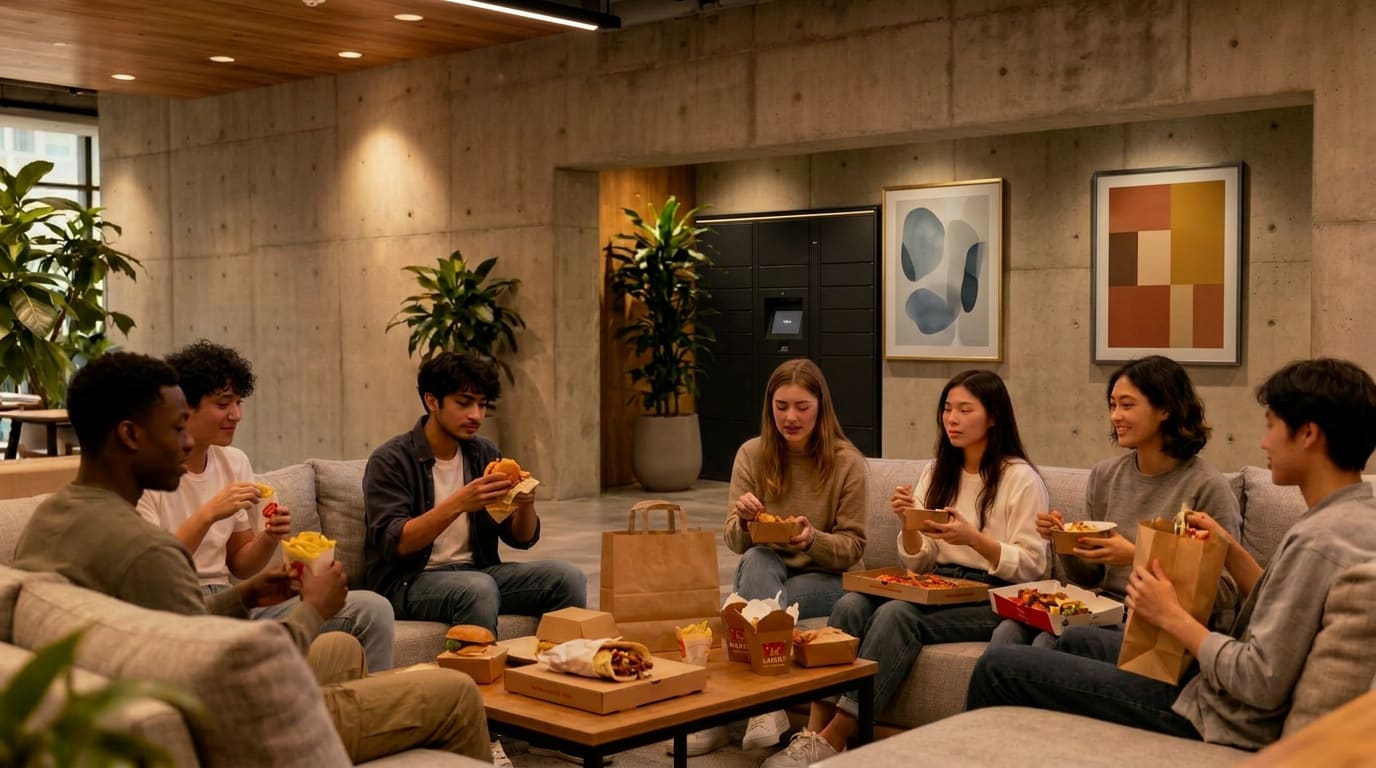
Co-living is communal by design — but food orders are deeply personal. Residents share kitchens, lounges and corridors, but no one wants their dinner sitting on a shared counter. The tension between community and privacy is the operational reality.
The challenges today
- Mixed-up orders
Bags left on shared kitchen counters get picked up by the wrong resident — accidentally or otherwise.
- Trust in shared spaces
Residents lose faith in communal areas when food, packages or drinks go missing.
- On-site team overload
House managers spend their day reuniting residents with the right bag instead of running community programmes.
How Foodie Locker innovates
- Secure individual handoff
Every order goes into a personal locker. Only the named resident can open it — community without compromise.
- Community time back
On-site teams stop chasing food bags and get back to events, programming and the things residents actually moved in for.
- Trust restored
Shared spaces stay shared. Personal items stay personal. The model finally works at scale.
Lunch handled, work uninterrupted
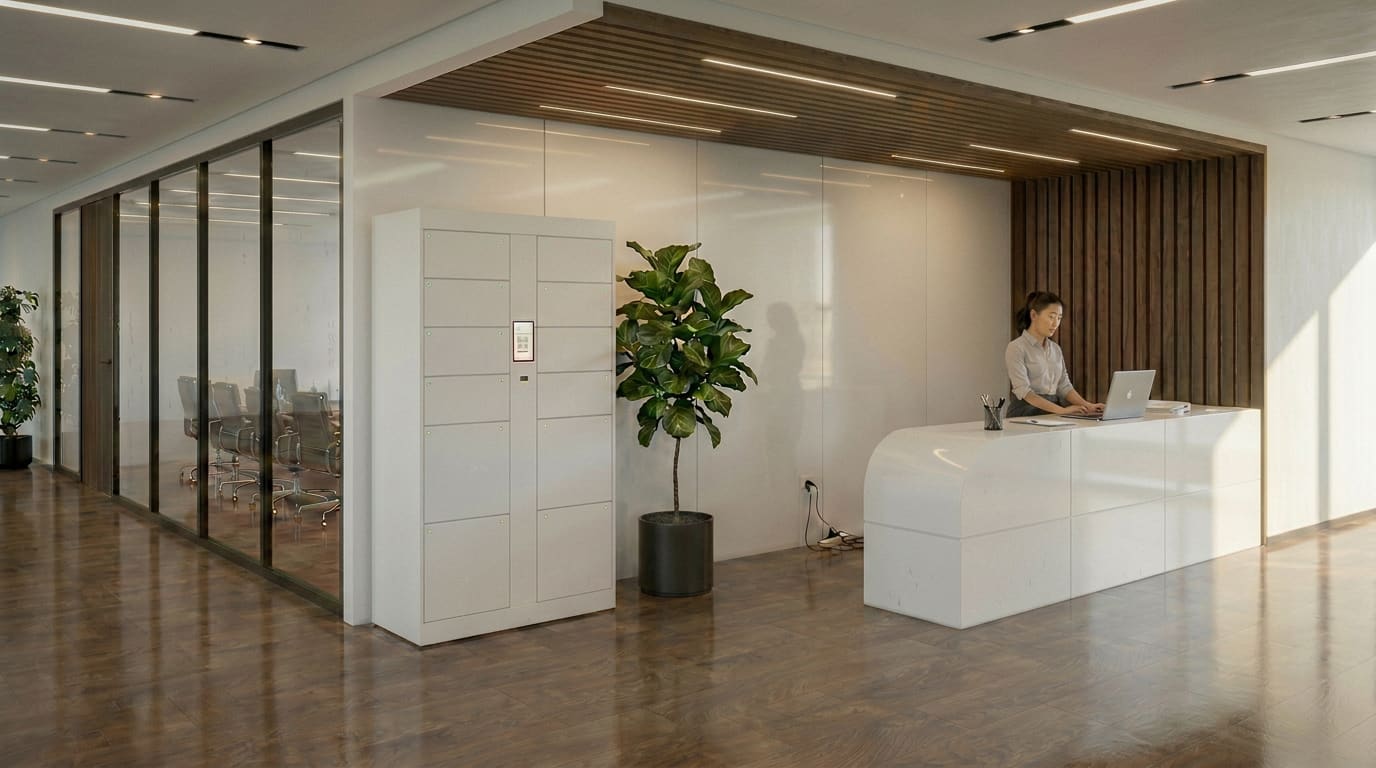
Modern offices have become food-delivery hubs. Lunch lands between 12 and 2pm in concentrated waves — and reception teams are the unintended hot-food triage centre. In multi-tenant and co-working buildings, the problem multiplies.
The challenges today
- The lunchtime rush
Couriers pile up at reception. Bags get cold. Reception staff field constant 'has my food arrived?' calls.
- Multi-tenant complexity
Couriers don't know which floor or company a recipient sits on. Wrong-floor handoffs are routine.
- Productivity drag
Employees abandon meetings to collect food. Focus time gets shredded by lobby trips and missed couriers.
How Foodie Locker innovates
- Deliveries on your schedule
Food drops into insulated lockers. Employees collect when their meeting ends — not when the courier arrives.
- Reception, restored
Front-desk teams stop being food triage and go back to running the building experience tenants actually pay for.
- Multi-tenant ready
Each order is matched to the right person, on the right floor, with the right access code. No mix-ups, no escorts.
Late-night food, without a kitchen
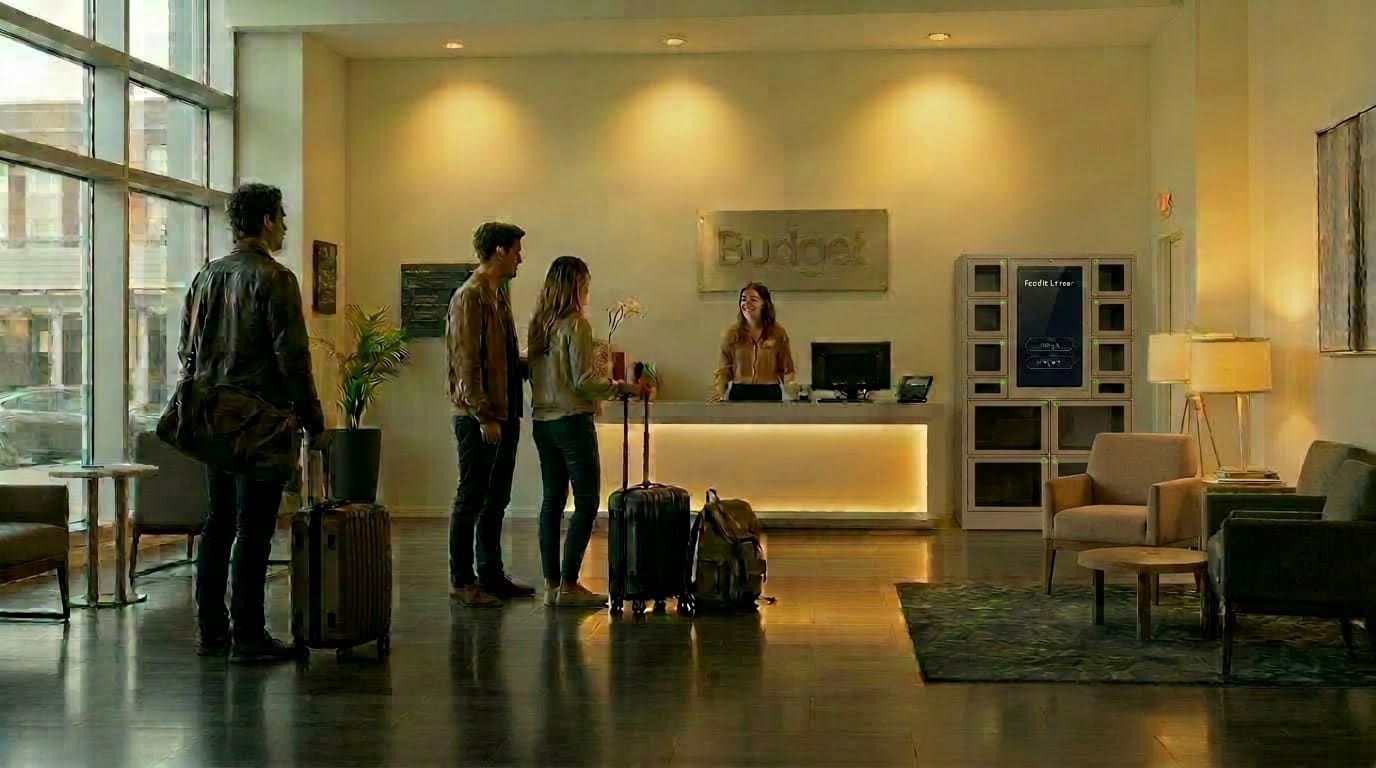
Budget and short-stay hotels typically have limited or no on-site food, especially out of hours. Guests arriving late or eating outside breakfast windows are left fending for themselves. Foodie Locker turns the lobby into a curated link to the best local restaurants, available 24/7.
The challenges today
- No food after hours
Restaurants close, room service is limited or absent, and guests checking in late have nowhere to go for a hot meal.
- Lobby logistics
Couriers and guests crowd the front desk during peak evening windows, distracting reception from check-ins and queries.
- Generic guest experience
Guests resort to whichever app loads first, missing the local food gems that would actually make their stay memorable.
How Foodie Locker innovates
- Curated local ecosystem
Partner with the best independents and operators in the area — guests discover local food gems through the hotel, not in spite of it.
- Contactless, 24/7 collection
Couriers drop into insulated lockers in the lobby. Guests collect on their own schedule, day or night, no reception queue.
- New revenue & loyalty
A new amenity that lifts guest reviews, reception efficiency and creates a partnership channel with local restaurants.
A 24/7 amenity for the people who keep things running
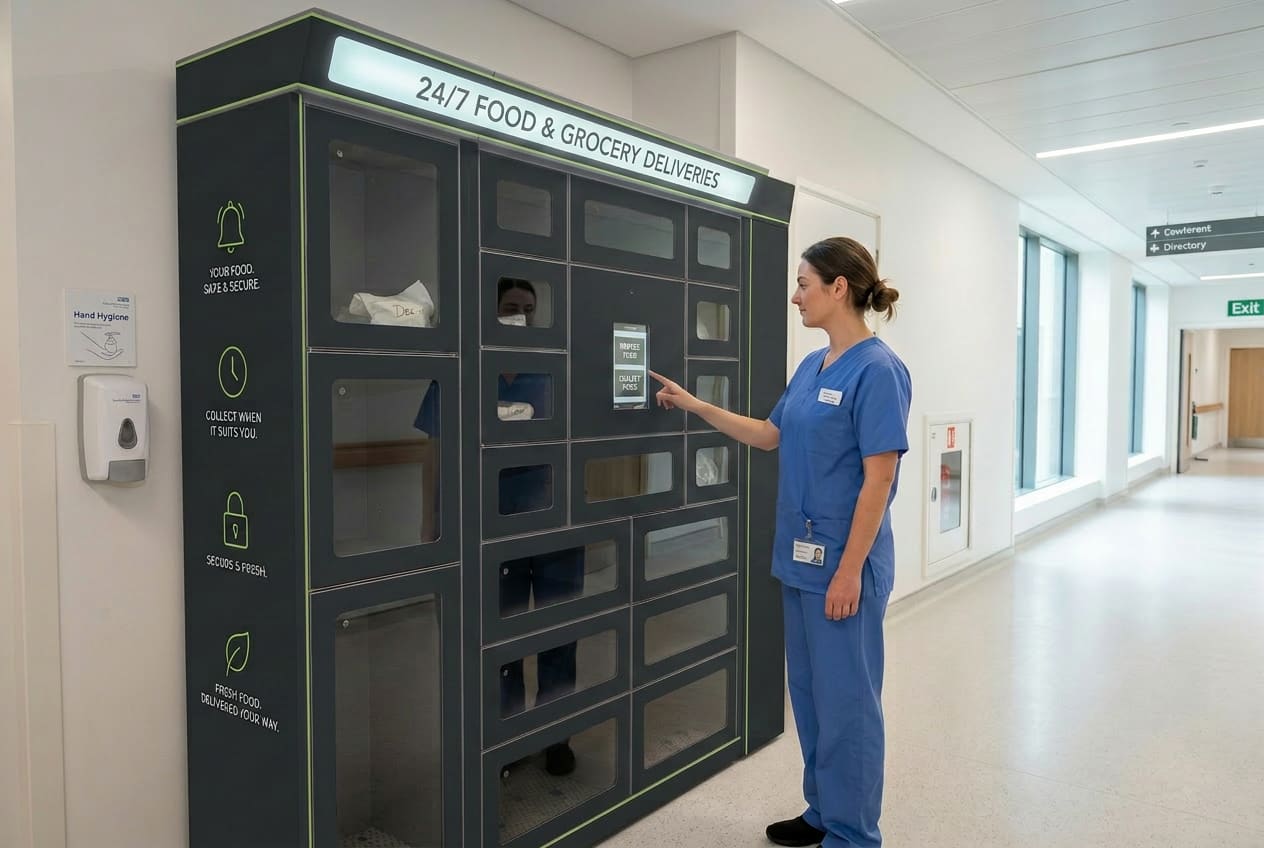
Hospitals, healthcare campuses, manufacturing sites and large corporate estates run around the clock — but the food infrastructure usually doesn't. Foodie Locker gives shift workers and night staff the same access to hot meals, groceries and essentials as anyone else, securely and without disrupting the front desk. It sits alongside (or extends) any existing vending machines and canteen offer on site — so staff can grab restaurant-quality food on shift, and pick up a grocery delivery on the way home. Real choice, real convenience, on every shift.
The challenges today
- Canteens close, shifts don't
Night staff and long-shift workers are locked out of hot food once the canteen shuts — left with vending machines or nothing at all.
- Couriers can't enter the estate
Wards, labs and restricted floors are off-limits to delivery riders. Reception and security teams get pulled into ad-hoc food triage.
- Limited staff amenity
Few visible benefits exist for the people working the hardest hours — a real gap in wellbeing, retention and recruitment.
How Foodie Locker innovates
- An amenity that works every shift
Insulated compartments protect meals for staff finishing a 12-hour shift at 3am. Collected on their schedule, not the courier's.
- Security without friction
Couriers drop into a controlled, monitored zone — never beyond it. Every interaction is logged, badge-linked and CCTV-ready.
- A real staff benefit
Position Foodie Locker as part of your wellbeing offer — a visible, day-one amenity that supports the people doing the hardest hours.
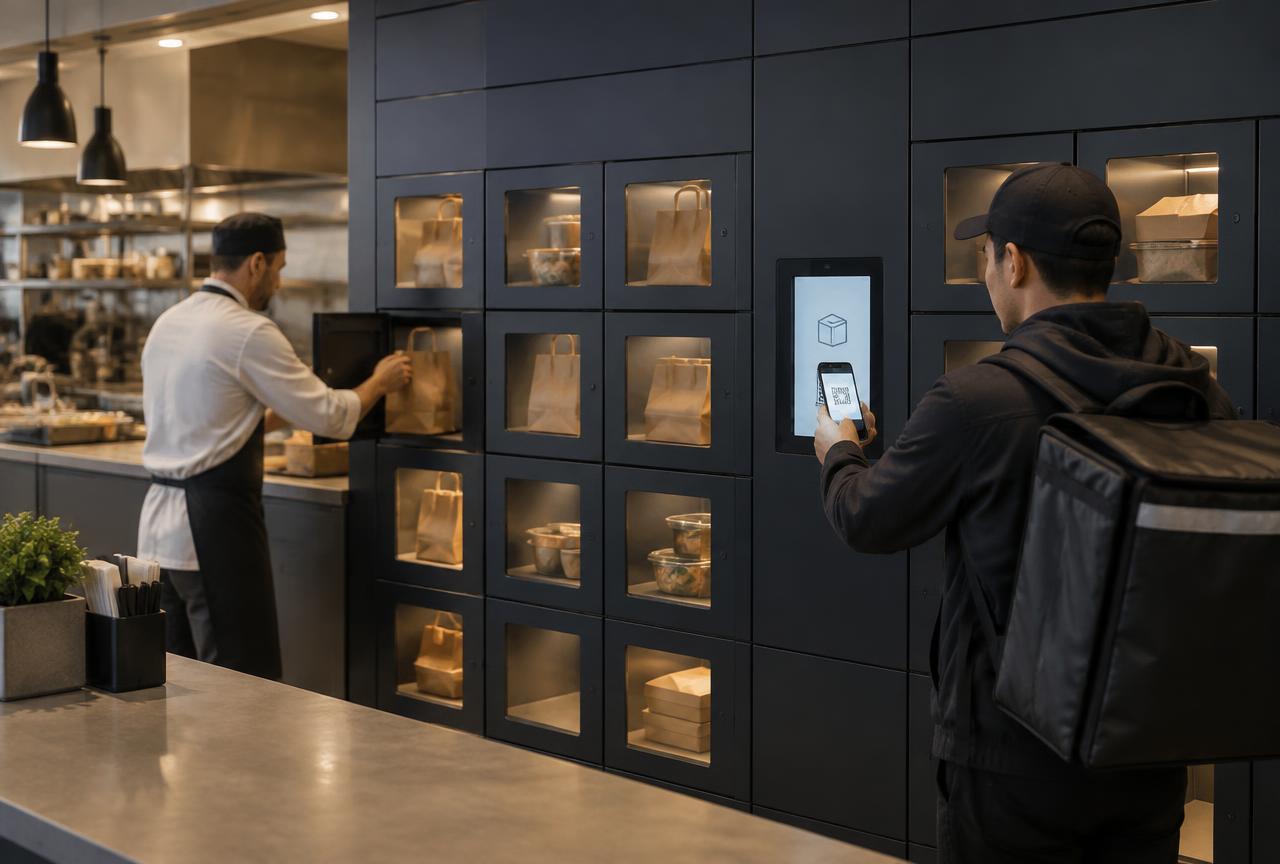
Cook. Load. Collected.
You've already automated ordering — websites, apps, QR codes, kiosks and delivery platforms. The final step is still manual: a member of staff stops what they are doing, finds the order and hands it over. Foodie Locker automates that handover, giving takeaways, restaurants, street food operators and dark kitchens a secure, self-service collection point for customers and delivery drivers.
The challenges today
- Drivers crowding the counter
Peak delivery periods create congestion exactly when the kitchen is under the most pressure.
- Staff pulled off the pass
Every collection means stopping preparation to identify the order and hand it over.
- Orders waiting in the open
Finished food sitting on a counter loses heat and gets picked up by the wrong person.
How Foodie Locker innovates
- Secure self-service handover
Staff load the order into an allocated compartment; the customer or driver opens it with a one-time code.
- Insulated short-dwell compartments
Insulated compartments keep orders secure and protected for short collection windows.
- Built to connect
Designed to sit alongside POS, online ordering, kiosks and kitchen display systems as the physical fulfilment endpoint.
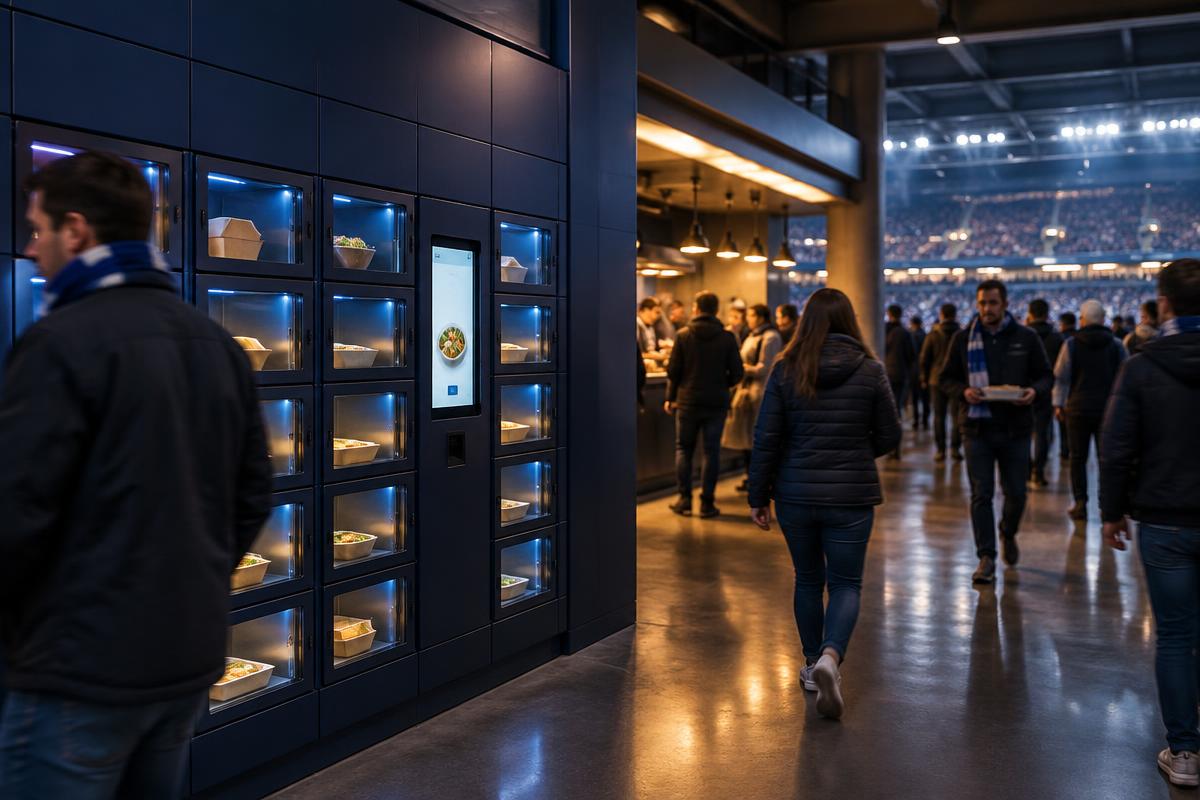
More food sold per event
Stadiums, arenas and exhibition centres concentrate demand into short windows — doors, kick-off, half-time, the encore. Catering teams can only serve so fast, and every minute a fan spends queueing is a sale the venue may never make. Foodie Locker adds self-service collection points across the concourse: fans order at a kiosk or from their phone and collect from insulated compartments that staff reload between rushes.
The challenges today
- Queues peak at the worst moment
Demand spikes at doors, kick-off and half-time. The longest queue forms exactly when the venue has the least time to serve it.
- Every extra sale needs another counter
Serving more fans usually means another staffed point — more labour, more footprint, more equipment.
- Handovers eat the kitchen
Pre-ordered, hospitality and VIP food pulls staff off preparation to find bags and hand them over.
How Foodie Locker innovates
- Kiosk order and collect
Self-service kiosks take orders and issue collection codes, so fans order once and collect when it suits them.
- Reload between rushes
Rear-loading compartments let catering teams replenish a bank during half-time or a set change without closing the point.
- Revenue beyond the counter
Collection points across the concourse and hospitality areas capture lost demand, with commercial placements adding another route.
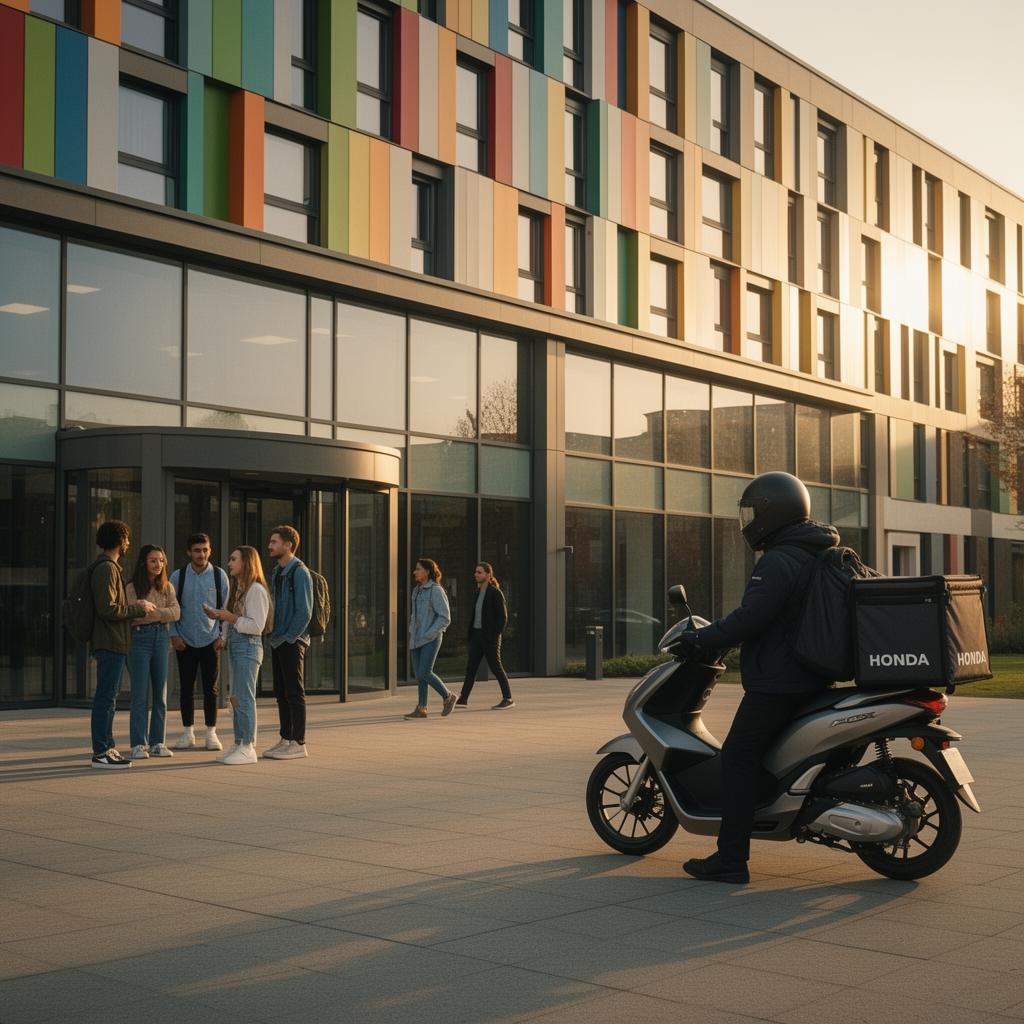
Pre-ordered lunches, zero queue
School and college lunch breaks are short, and the canteen queue can eat most of them. Foodie Locker lets students and staff pre-order from the canteen or approved local partners and collect from insulated compartments in seconds — no queue, no cash, no crowded servery. It extends the existing food provision rather than replacing it, and gives catering teams a calm, predictable service window.
The challenges today
- The queue eats the break
A 30-minute lunch break shrinks fast when half of it is spent queueing at the servery.
- Crowded serving points
Everyone arrives at once. Congestion at the canteen creates supervision and safeguarding pressure.
- Limited choice on site
Students who don't want today's canteen option often go without — or leave site to find food.
How Foodie Locker innovates
- Pre-order, then just collect
Meals are ordered in advance and loaded into compartments. Students open their door with a code and are back with friends in seconds.
- Insulated compartments
Food stays protected and at temperature until collected — no trays sitting out, no mix-ups.
- Extends the canteen
Works alongside existing catering, adding capacity and approved local options without more serving staff.
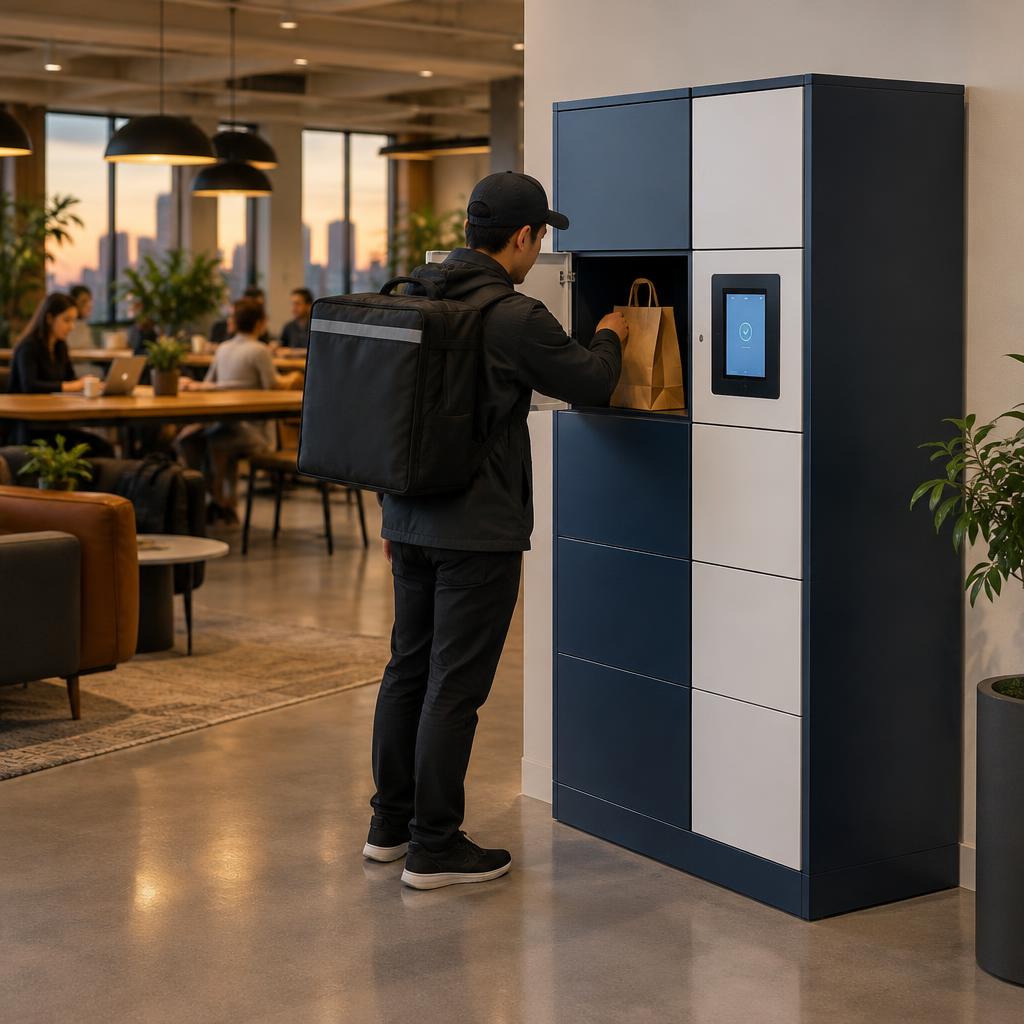
One drop-off point for every member
Co-working members order lunch, coffee rounds and groceries all day — and every delivery lands on the community team's desk. Foodie Locker gives the whole space a single, secure drop-off point: couriers deliver to the lockers, members get notified and collect when it suits them. The front of house stays focused on members, not meal bags.
The challenges today
- Deliveries all day long
Unlike offices with one lunch rush, co-working spaces see a steady stream of couriers from morning to evening.
- Community team as receptionist
Every 'has my order arrived?' interrupts the people meant to be building the member experience.
- Bags in shared areas
Orders left on kitchen counters and phone booths get cold, go missing, or end up with the wrong member.
How Foodie Locker innovates
- Secure individual handoff
Each order goes into its own compartment. Only the named member's code opens it — no mix-ups, no missing lunches.
- A visible member perk
Position lockers as part of the membership offer — a practical, everyday benefit that helps sell desks.
- Community time back
The team stops managing deliveries and gets back to events, tours and the members in front of them.
We value your privacy
We use cookies to enhance your experience, analyse site usage, and assist in our marketing efforts. You can manage your preferences below. Read our Cookie Policy for more details.