
Door or lobby? The food delivery debate residents are quietly having
Should couriers come to your door, or hand off in the lobby? It feels like a personal preference — until you account for the 70% of residents who never order, the bike-theft risk to the courier, the 2-minute average wait before an order is cancelled, and the building-wide safety trade-off. Here's the honest version of the debate.
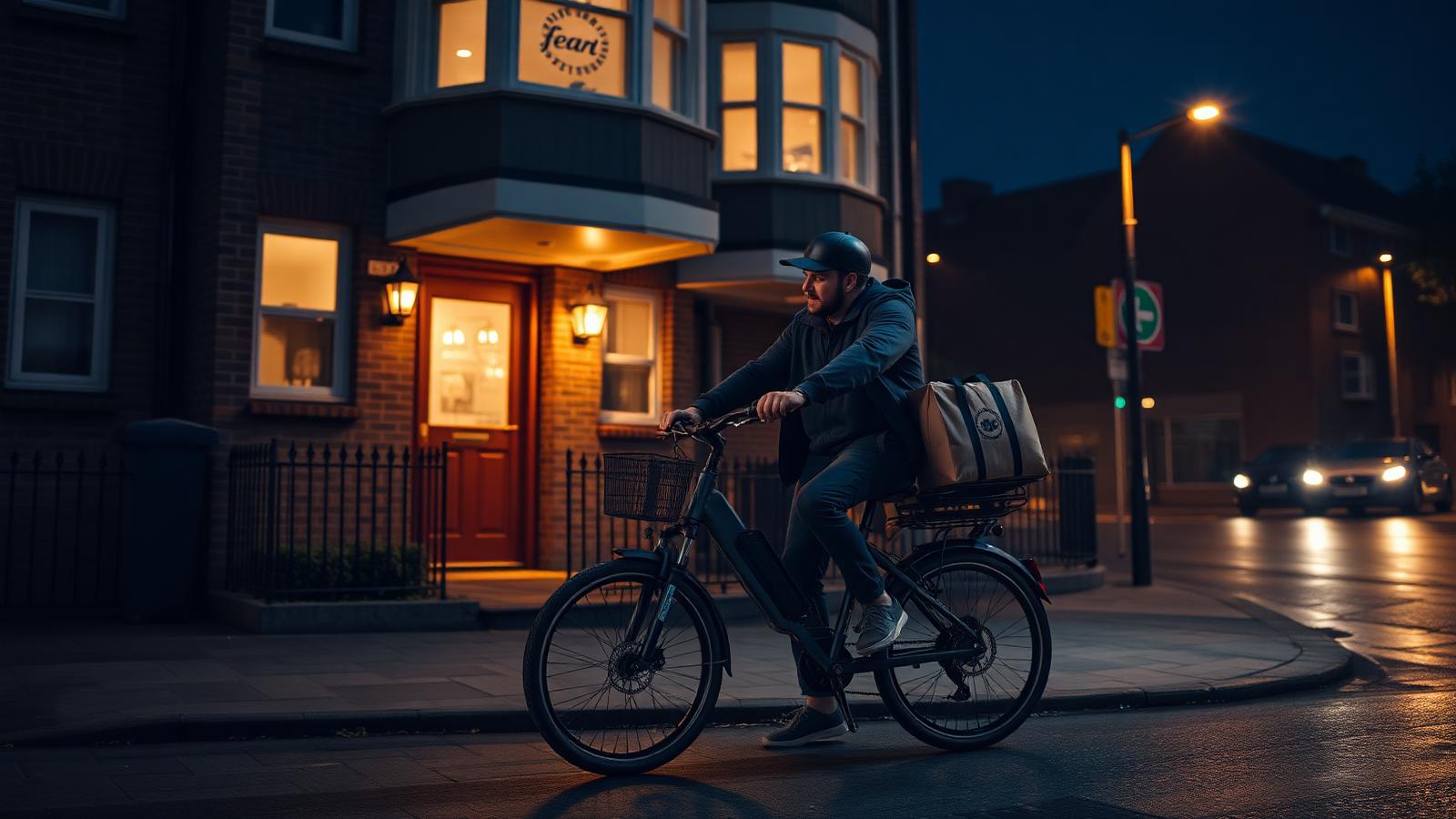
There's a thread that does the rounds on r/AskUK every few months: do you expect a food delivery rider to bring your order to your actual door, or are you happy meeting them at the building entrance? It looks like a personal-preference debate, and at the resident level it is. But scale it up to a 200-flat building and it stops being personal — because most of the people living in that building never order food, and they're carrying the consequences of the people who do.
This is the version of the conversation that almost never gets had openly: the trade-off between one resident's convenience, the courier's earnings, the bike left unattended on the pavement and the building-wide safety posture. It's worth saying out loud, because once you do, the case for a clean lobby handover stops sounding like a corporate efficiency move and starts sounding like the thing the community would actually choose.
Only a slice of the building ever orders — but everyone wears the risk
In a typical UK Build-to-Rent or PBSA scheme, regular food-delivery users sit somewhere between 25% and 40% of residents. The rest — older residents, families, professionals who cook, students on tight budgets, anyone who just doesn't fancy Uber Eats — are net non-participants in the delivery service.
But they're full participants in the consequences. Every courier admitted into the building is in their corridors too. Every fire door propped to make a drop-off is a fire door propped on their floor. Every lobby door swung open at 11pm is a security event for the whole building, not just the resident with the food bag waiting.
Framed honestly, the question isn't 'do you want couriers at your door?' — it's 'is the convenience to 30% of residents worth the security and safety exposure to the other 70%?'. Most communities, asked that way, give a different answer than the one they'd give as individuals.
The courier's side of the same coin
It's worth swapping shoes with the courier for a minute, because the door-vs-lobby debate looks very different from a saddle in the rain. Couriers on Deliveroo, Uber Eats and Just Eat are paid per delivery, not per minute. Anything that adds time to a drop directly cuts their hourly earnings.
- Buzzing the intercom and waiting to be let in: 60–180 seconds
- Lift up to floor 12, walk along the corridor, find the right flat: 2–4 minutes
- Resident not answering the door immediately: another 1–3 minutes
- Lift back down, back onto the bike: 1–2 minutes
A door-to-door drop in a tower can comfortably eat 6–10 minutes more than a lobby handover. Across an 8-hour shift that's 4–6 fewer drops completed — sometimes £25–£40 of lost earnings on a busy night. Every door-to-door delivery is, very literally, a transfer of value from the courier's wage to the resident's convenience.
The 2-minute rule: how long couriers actually wait
Most platforms have an explicit policy on how long a courier should wait before cancelling an order. The widely reported industry standard is around 5 minutes for unresponsive customers, but field-level practice is shorter than that. On busy nights couriers will routinely abort after roughly 2 minutes of buzzing or knocking — partly because waiting longer is unpaid time, and partly because the platform's own routing algorithm penalises slow drops by sending the courier fewer offers.
That has a real-world consequence operators don't always see: a meaningful share of food orders that go missing 'in the building' weren't lost — they were cancelled at the door, refunded by the platform, and the rider rolled on to the next job. The resident sees a refund and a complaint. The courier sees lost earnings. The building sees an angry message at the front desk. Nobody sees the actual cause: the building made the handover too slow.
A locker handover removes the wait entirely. The compartment opens, the bag goes in, the courier scans out and is back on the bike inside 60 seconds. No buzzer, no lift, no knock-and-wait, no cancellation.
Bike theft: the cost couriers absorb so residents can stay upstairs
There's another courier cost that almost never enters the resident-side debate: bike theft. When a courier goes inside a building to deliver to the door, the e-bike — often worth £1,500–£3,000 and effectively the courier's entire means of earning a living — is left on the pavement, unattended, sometimes for 5+ minutes.
UK e-bike theft has risen sharply over the past three years and food-delivery riders are a recognised target. A bike stolen during a drop-off is more than an insurance claim — for many gig riders it's the end of that month's income. Couriers know this, which is why some now refuse door-to-door drops in higher-risk postcodes outright, and others rush so fast they make mistakes.
A lobby or locker handover means the bike is in line of sight, locked or held, for a maximum of about a minute. That's not a small detail — it's one of the biggest unspoken reasons riders prefer buildings with a clean entrance handover.
What the community trade-off actually looks like
Pull all of that into one frame and the door-vs-lobby choice stops being about resident preference and starts being about a small set of community trade-offs:
- Convenience for ~30% of residents who order regularly, vs the safety posture of the other ~70% who don't
- Faster drops and higher earnings for the courier, vs an extra two minutes of personal service for the resident
- Lower bike-theft exposure for the courier, vs the marginal effort of walking to the lobby
- Fewer cancelled-order refund disputes for the building, vs slightly less doorstep ceremony for the resident
None of these are dramatic on their own. Together they're the difference between a building that absorbs delivery well and a building that fights it every night.
The locker as the neutral middle
This is the part where the smart-locker pitch lands, but not in the usual way. The case for a locker bank in the entrance isn't 'security theatre' or 'concierge offload' — it's that the locker is the only handover model that actually balances all four parties: residents who order, residents who don't, couriers, and operators.
- Residents who order: contactless collection, no waiting in for the buzzer, hot food in heated compartments, chilled food in chilled compartments
- Residents who don't order: no strangers in their corridors, no propped fire doors, no late-night intercom roulette
- Couriers: 60-second drop, no lift cycles, bike in line of sight, no cancelled-order earnings loss
- Operators: clean audit trail, no front-of-house dispute queue, building safety story they can talk about openly
It's a rare configuration where the right answer is genuinely in the interest of all four sides. Most operational decisions in residential buildings have a clear loser. This one doesn't.
Related reading: Why locking food couriers out of buildings makes everyone less safe · An accident waiting to happen: unvetted couriers in residential buildings · Building Safety solution overview.
How to actually have this conversation in your building
The single most useful thing operators can do is run the question openly, not assume the answer. A two-question resident pulse — 'how often do you order food delivery?' and 'how do you feel about couriers in your corridor?' — almost always produces a clearer mandate for a lobby/locker model than the operator expected. From there, the install is the easy part.