
Banned at the door: why locking food couriers out of buildings makes everyone less safe
Luxury London buildings are banning food delivery riders from entering — leaving couriers, residents and the public worse off. Here's why outright bans are a security failure, and what good looks like instead.
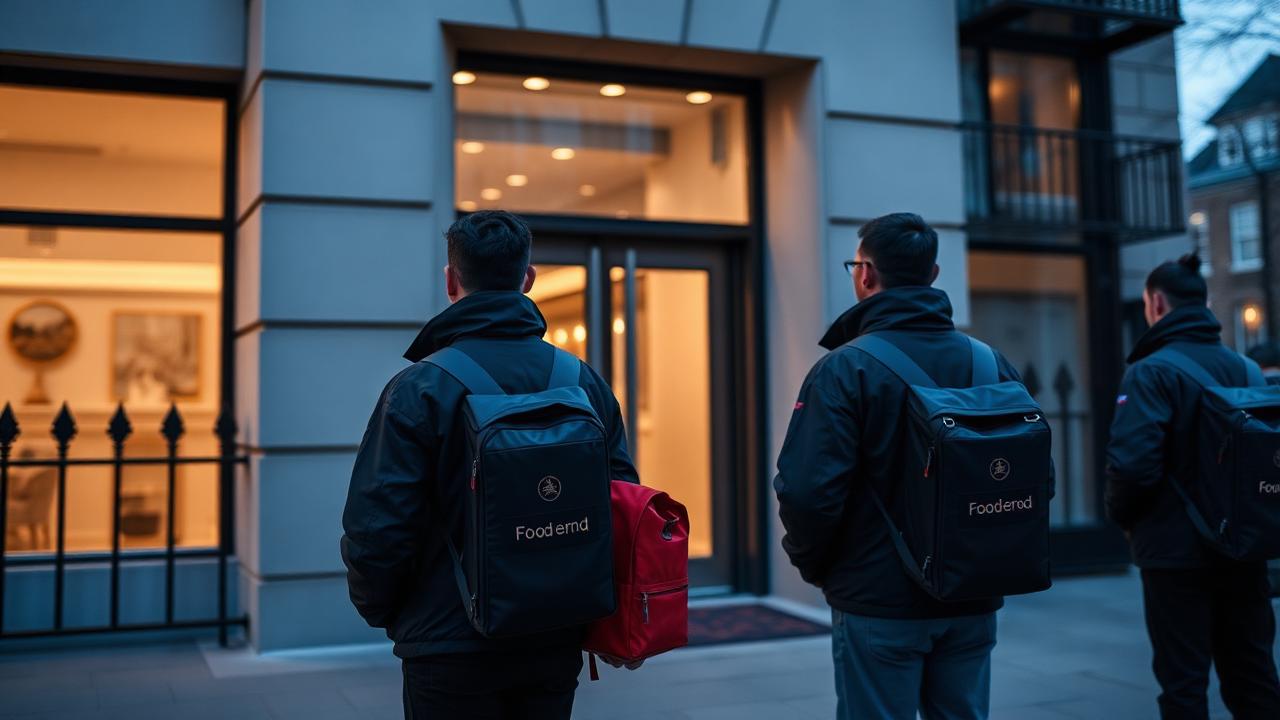
In August 2025 The Guardian reported that several luxury London apartment buildings had started banning food delivery riders from entering — citing security concerns, lobby congestion and complaints from residents. On the surface it sounds like a tidy fix. In reality, an outright ban just pushes the problem onto the pavement, and creates a new set of security and safety risks for everyone involved.
Couriers end up loitering in groups outside the front door. Residents have to come out — often late at night, often alone — to collect a hot bag from a stranger on a dark street. Neighbours and the wider public see clusters of idling riders blocking pavements. The building feels less premium, not more. And the underlying problem — that there's no proper infrastructure for the 2–3 food deliveries per resident per week now flowing into modern buildings — hasn't been solved at all.
Why buildings are banning couriers in the first place
The concerns driving these bans are real. Operators and concierge teams have spent the last few years dealing with:
- Couriers tailgating residents through secure entrances and roaming corridors unsupervised
- Bags being left on lobby counters, behind reception, or outside apartment doors — and going missing
- Lobbies turning into informal courier waiting rooms during peak meal times
- CCTV footage of unknown individuals on resident floors with no accountable record of who they are
- Front-of-house teams spending hours triaging Deliveroo, Uber Eats and Just Eat bags instead of serving residents
Banning couriers from entering the building feels like a clean answer to all of that. It isn't.
The ban just moves the risk outside
Once couriers can't come in, they have to wait somewhere. In practice that means the pavement directly outside the front door — usually in groups, usually for several minutes per drop, usually around peak meal times when the street is already busy.
That creates three knock-on problems the original ban doesn't address:
- Public realm impact — clusters of idling e-bikes and mopeds block pavements, intimidate passers-by and create friction with neighbouring buildings and local councils
- Courier safety — legitimate riders get lumped in with the small minority causing problems, are left exposed to street crime, weather and confrontations, and lose income on every minute spent waiting outside a locked door
- Resident safety — every delivery now requires the resident to physically come outside to meet a stranger, often late at night, often alone, often holding a phone and a wallet on a dark street
The lone-resident collection problem
This is the part that gets discussed least and matters most. Food delivery is disproportionately ordered in the evening: Friday and Saturday nights, late dinners, post-pub orders, end-of-shift meals for people living alone. Banning couriers from the lobby effectively forces every one of those residents — many of them women, students or shift workers — to walk out of a secure building into the street, alone, at the exact moment they are most vulnerable, to identify themselves to a courier they have never met.
That is not a security upgrade. It is a security trade — swapping a controlled risk inside a monitored building for an uncontrolled one on a public street. The buildings making this trade rarely measure the second half of it.
It's also unfair to legitimate couriers
The vast majority of food delivery riders are doing exactly what their platform tells them to do: turn up, drop off, leave. Blanket bans treat them as a security threat by default. They are then expected to absorb the cost — longer drop times, lost earnings, exposure to the weather and to crime, and the reputational hit of being publicly excluded from the buildings they're contracted to serve.
There is a legitimate problem with a small number of bad actors using delivery uniforms as cover. The answer to that is identification, audit trails and access control — not collective punishment of an entire workforce.
What good actually looks like
The right response to courier-related security concerns isn't to lock couriers out. It's to give them — and residents — a controlled, audited, contactless handover point inside the building. Smart food lockers do exactly that:
- Couriers enter a designated locker zone (often in or near the lobby) without needing access to lifts, corridors or resident floors
- Every drop-off is authenticated, timestamped and logged against a specific compartment and a specific order
- Residents collect on their own schedule with a one-time PIN — no doorstep meetings, no lobby loitering, no late-night handovers on the street
- CCTV-integrated locker stations create a clean chain of custody for every single delivery
- Front-of-house teams stop being a triage desk for Deliveroo bags and go back to serving residents
That gives operators what they actually wanted from the ban — couriers off resident floors, no unattended bags, no lobby chaos — without offloading the problem onto the pavement, the courier or the resident.
The business case for solving it properly
Outright bans tend to escalate. Riders complain to platforms; platforms warn restaurants; restaurants flag the building as a delivery black-spot; residents complain that their food now arrives cold, late or not at all; the building's amenity reputation takes a hit. None of that shows up in the original 'we banned couriers' decision, but all of it shows up in NPS scores and renewal rates six months later.
A locker-led handover, by contrast, scales: more deliveries per peak hour, fewer concierge interruptions, no theft, no resident exposure, a defensible audit trail, and a building that feels calmer and more premium — not less.
How Foodie Locker fits
Foodie Locker is purpose-built for exactly this scenario. Heated, ambient and chilled compartments handle every type of delivery. Open courier flows support Deliveroo, Uber Eats, Just Eat, DoorDash and direct-from-restaurant. Every drop-off and collection is authenticated and logged. Couriers don't need to roam the building. Residents don't need to come outside. And operators get a clean, monitored, premium handover layer that solves the security problem properly — instead of pushing it out onto the street.