
Workplace food delivery security: the 2026 playbook for London offices
Food courier tailgating, lobby congestion and wrong-floor deliveries have quietly become the biggest unforced security failure in London commercial buildings. Here's how leading landlords are fixing it without restricting how employees eat.
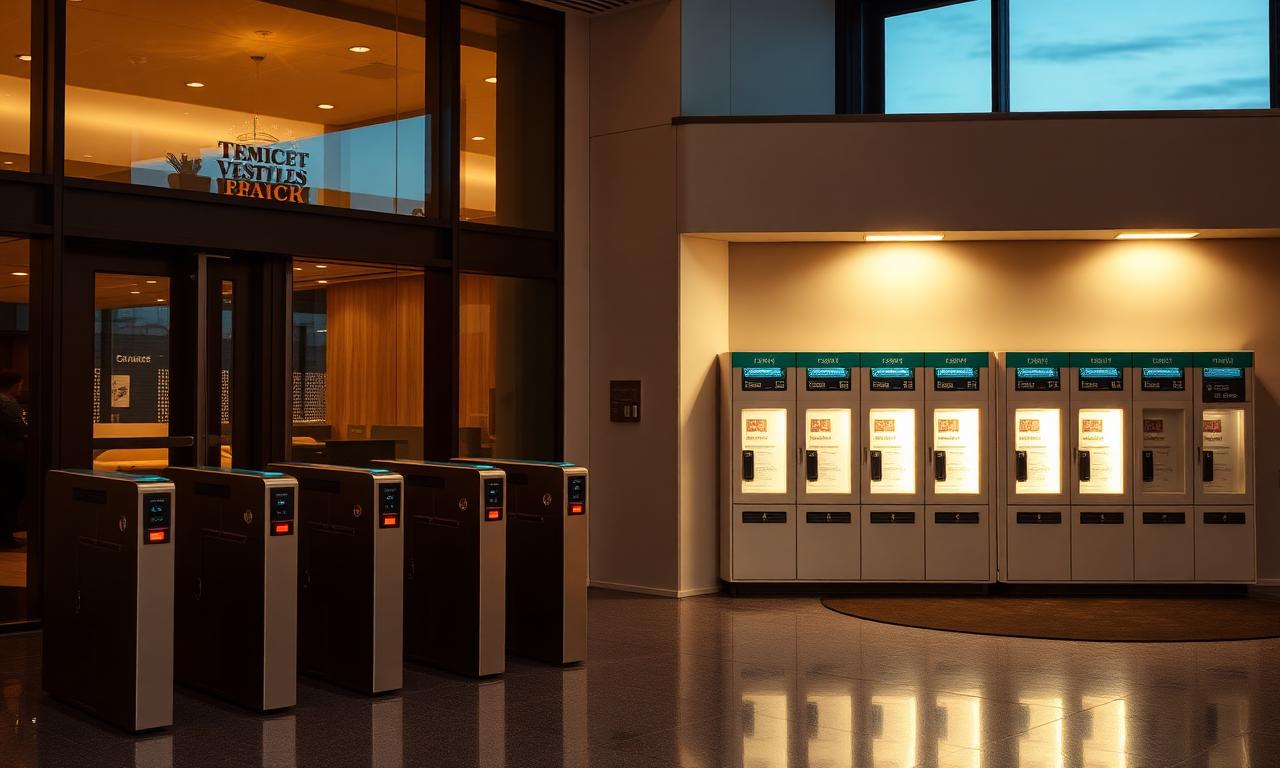
Office security in London has quietly been reshaped by food delivery. Deliveroo, Uber Eats and Just Eat now drop tens of thousands of bags a day into commercial reception desks across the City, Canary Wharf, Soho and the West End — and reception teams that were designed to manage visitors and post are now managing an unbroken queue of food couriers from 12:00 to 14:30 and again from 17:30 to 20:00.
This is the 2026 playbook for tightening workplace security around food delivery without making the lobby feel like an airport — and without telling employees they can't have lunch at their desk.
1. The new commercial reception threat model
Pre-2020 the reception threat model was visitors, post and the occasional contractor. In 2026 it is overwhelmingly food couriers — anonymous, uniformed, in a hurry, often unable to name the recipient or floor, and frequently tailgating residents and employees through the turnstile because they don't have a pass. Reception teams have absorbed this with no extra headcount and no extra process.
2. Tailgating through the turnstile — the #1 unforced failure
The single most common London office security breach in 2026 is a food courier tailgating an employee through the speed gate, on the basis that 'I'm just dropping a Deliveroo'. The fix is not to lecture employees. It is to remove the reason the courier ever needs to pass the turnstile in the first place — a ground-floor food locker bank inside the building line but outside the access-controlled zone.
3. Lobby congestion and the perception of safety
Tenants don't grade reception on theoretical security. They grade it on whether the lobby feels managed at 12:45. A reception desk with 14 couriers stacked at the front, three employees trying to sign in a client and a meeting-room queue does not feel managed — it feels exposed. Routing all food deliveries through a self-serve locker layer recovers the lobby visually and operationally.
4. Multi-tenant towers and the wrong-floor problem
In a 14-tenant City tower, the courier doesn't know whether the order is for L4 marketing or L11 legal. Reception ends up either calling around or letting the courier roam. Both are security failures. A centralised food locker bank with the recipient's name and floor on the screen ends the wayfinding chaos and removes the operational pressure on the reception team.
5. Out-of-hours and late-evening delivery risk
London office food delivery volume between 18:00 and 22:00 has grown faster than any other window for three years running, driven by late-working teams. That is exactly the window with the lightest security cover. 24/7 self-serve food locker handover plus a clear post-18:00 'no courier above reception' rule eliminates the structural risk without restricting employees' ability to eat at their desks.
6. Reception staff as security, not delivery porters
Reception teams in London commercial buildings spend 25–40% of their working hours on food delivery triage at peak. That is the most expensive security asset in the building, spent moving Deliveroo bags rather than watching the door. Routing food through the locker layer is the highest-ROI security uplift most landlords can make this year.
7. ESG, BREEAM and the secure-by-design narrative
Premium London landlords are now writing food delivery handover into BREEAM, WELL and operational ESG narratives — both as a security control and as an amenity. A perimeter-or-ground-floor smart food locker bank is one of the few interventions that scores on amenity, occupier experience, operational efficiency and security in the same submission.
The 2026 commercial security stack for food delivery
- Ground-floor food locker bank inside the building line but outside the access-controlled zone
- Hard 'no courier above reception' rule, written into the building handbook and tenant pack
- Mobile credentials for employees with audit logging on every turnstile entry
- 24/7 self-serve handover so late-working teams never need to escort a courier upstairs
- Reception headcount re-focused on visitor management and floor-level incidents
- CCTV coverage of the food locker handover zone and the courier approach line
Book a 15-minute walkthrough for a London commercial building.