
Your university has a parcel strategy. But does it have a food delivery strategy?
Universities invested in parcel rooms and lockers years ago. Food, grocery and meal-kit deliveries now arrive in greater volume — with no strategy at all.
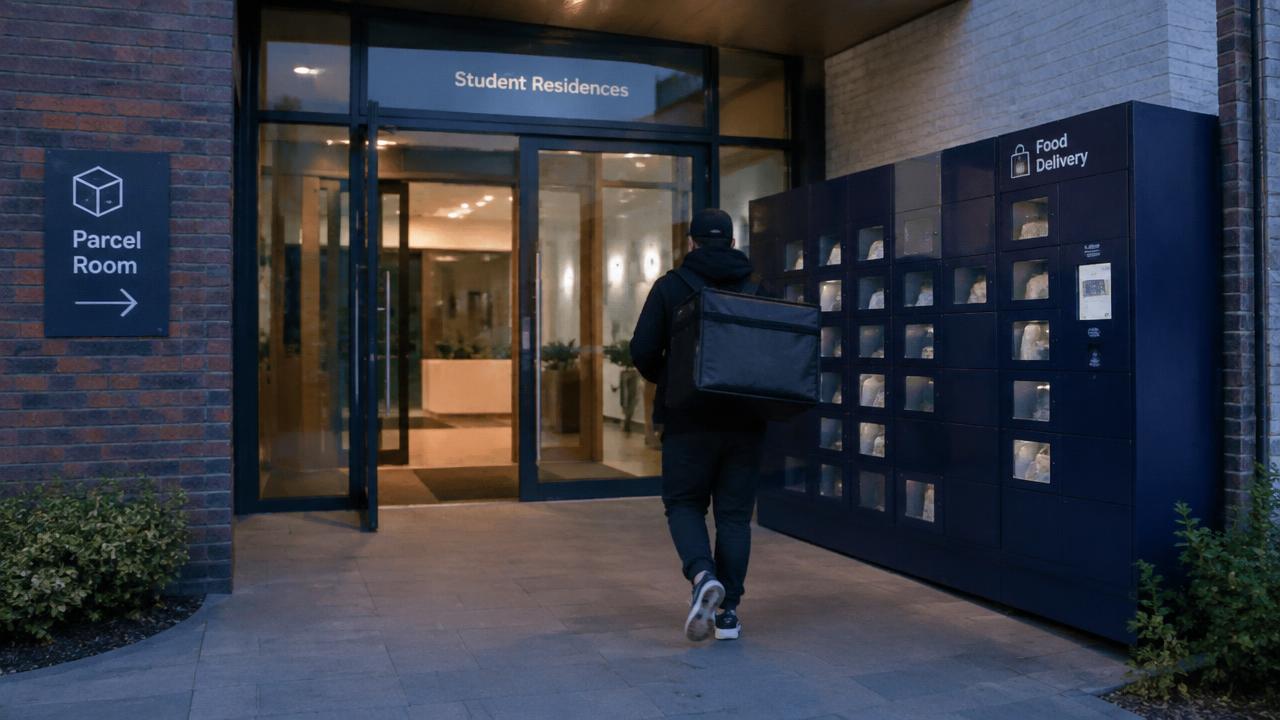
Most universities solved parcels years ago: a post room, then parcel lockers, then integration with student systems. Food is a different story.
Takeaways, groceries, meal kits and subscription boxes now reach campuses daily — often in larger numbers than parcels — yet many universities still have no defined process for receiving them.
Why food is different from parcels
- It arrives in the evening and late at night, when reception is often closed
- It is time-sensitive — the handover has to happen within minutes
- Couriers are paid per drop and under pressure to move on
- Many universities ask reception not to accept food at all
What happens without a strategy
Students meet drivers outside, doors get propped, drivers wander between blocks, and staff field calls from lost couriers. It is a safety, security and experience issue at the same time — see our safeguarding article.
What a food delivery strategy looks like
- One or more designated delivery points in lit, CCTV-covered locations
- Self-service insulated lockers so no staff handover is needed
- Clear courier guidance and wayfinding to each hub
- Notifications and PIN/QR collection for students
- Data on volumes, peaks and collection times
Who should own it
Food delivery sits between Estates, Facilities, Security and Residential Services. Assigning a single owner — and treating it as infrastructure, like parcels — is usually the first step.