
How to reduce security guard costs on student campuses — without compromising student safety
Security guarding is one of the largest controllable costs on a university campus or PBSA estate. Here's how leading operators cut guard hours and patrol spend while actually improving student safety — using layered infrastructure, automation and data instead of headcount.
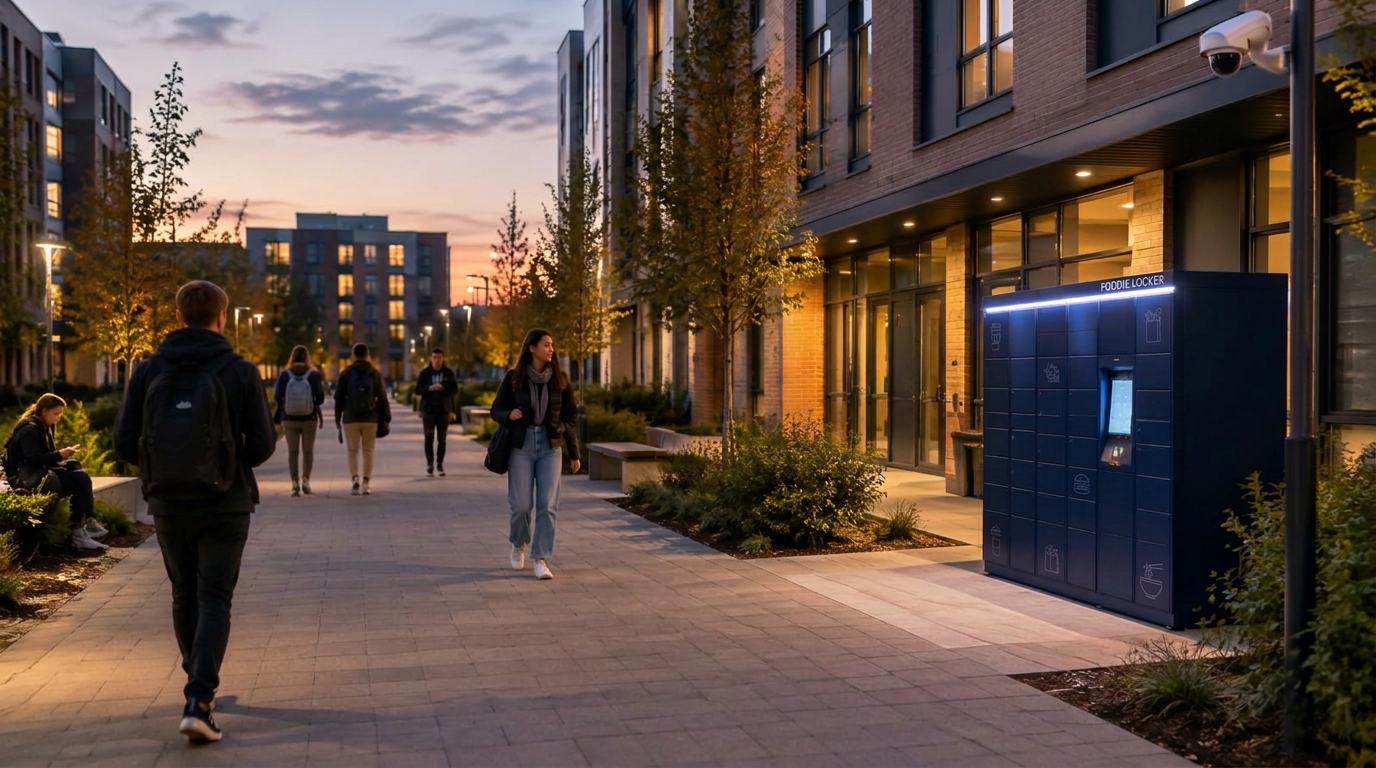
Security guarding is one of the largest controllable costs on a university campus or PBSA estate — often running into hundreds of thousands of pounds a year once nights, weekends and holiday cover are included. Yet most of what guards actually do isn't security work: it's letting couriers in, signing for parcels, walking students to their doors and watching lobbies.
The campuses reducing guard spend without compromising safety share one approach: they replace repetitive human tasks with layered infrastructure, and redeploy the people they keep onto work that genuinely needs a human.
Where campus security budgets actually go
Break down a typical campus or large PBSA security contract and a pattern emerges:
- Static lobby and gatehouse cover — much of it spent managing deliveries, visitors and couriers rather than threats
- Night patrols — checking doors, escorting students, responding to access issues
- Reception and concierge overlap — duplicated roles at shift change and peak times
- Event and induction surge cover — expensive short-term contracts every September
The uncomfortable truth: a large share of that spend is logistics, not security. Automating the logistics is where the savings live.
Layer 1 — Remove the courier and delivery problem from guards' plates
Students are the heaviest delivery demographic in the UK — food, grocery and meal-kit orders arrive late into the night, exactly when guard cover is most expensive. Without infrastructure, every delivery becomes a security decision: does the guard let the courier in, watch them, or turn them away?
Smart food and parcel lockers close that question entirely. Couriers are whitelisted and verified at the locker, deposits happen in a CCTV-covered zone without entering the building, and students collect with a one-time PIN. No escort, no door propping, no guard time — and a complete audit trail for every drop and collection.
Layer 2 — Automate access and audit, don't staff it
Tailgating, propped doors and unlogged visitors drive a huge share of campus incidents. Layered access control — smart entry, delivery PINs that expire, and immutable audit logs of who collected what and when — removes the ambiguity that guards are paid to resolve.
When every delivery and collection is timestamped and attributed, incident investigation drops from hours of CCTV scrubbing to a thirty-second dashboard query.
Layer 3 — Redeploy the guards you keep
This isn't about removing people — it's about making the people you have count. Campuses that automate delivery management typically reinvest recovered hours into:
- Visible patrols at genuine risk times — late-night walking routes, not lobby-watching
- Student welfare and safe-walk schemes — the human work that builds trust
- Faster incident response — because guards aren't tied to a desk signing for parcels
The result is a campus that feels safer to students while costing less to run.
What the numbers look like
A single 24/7 guarded position costs roughly £120,000–£150,000 per year fully loaded. Campuses that move delivery management, visitor audit and routine access checks to automated infrastructure commonly reduce static guarding by one full-time-equivalent position or more per building — while delivery-related incidents and complaints fall to near zero.
Students notice the improvement, not the cut: hot food that's still hot, parcels that never go missing, no strangers roaming corridors, and guards who are visible where it matters.
Safety improves when systems carry the routine load
The campuses with the best safety records aren't the ones with the most guards — they're the ones where routine transactions are handled by systems, and humans handle the exceptions. Layered locker infrastructure, verified courier flows and auditable access give students consistent protection at 2am on a Tuesday, not just during staffed hours.
With a fully funded deployment — £0 capex, £0 monthly cost — the infrastructure can be installed across an estate without a capital bid, and commercial revenue of up to £200/month per locker unit helps fund welfare and patrol programmes instead.
See how this works on our student campuses page, read the PBSA student safety playbook, or talk to us about your estate.