Integrating Foodie Locker into hotel apps and PMS — or running it standalone: a deployment guide
Foodie Locker can plug into a hotel's existing guest app and PMS for a fully branded experience, or run as a standalone amenity with its own QR-and-PIN flow. Here's how each deployment model works, what it integrates with (Opera, Mews, Cloudbeds, IHG, Marriott Bonvoy apps), and how to choose the right path for your estate.
Foodie Locker can plug into a hotel's existing guest app and PMS for a fully branded, single-sign-on experience — or run as a standalone amenity with its own QR-and-PIN flow. Most operators start standalone for speed of deployment and move to integrated once they have validated demand. Both models are first-class. This guide walks through how each works, what they integrate with, and how to choose.
Standalone deployment — the fastest path live
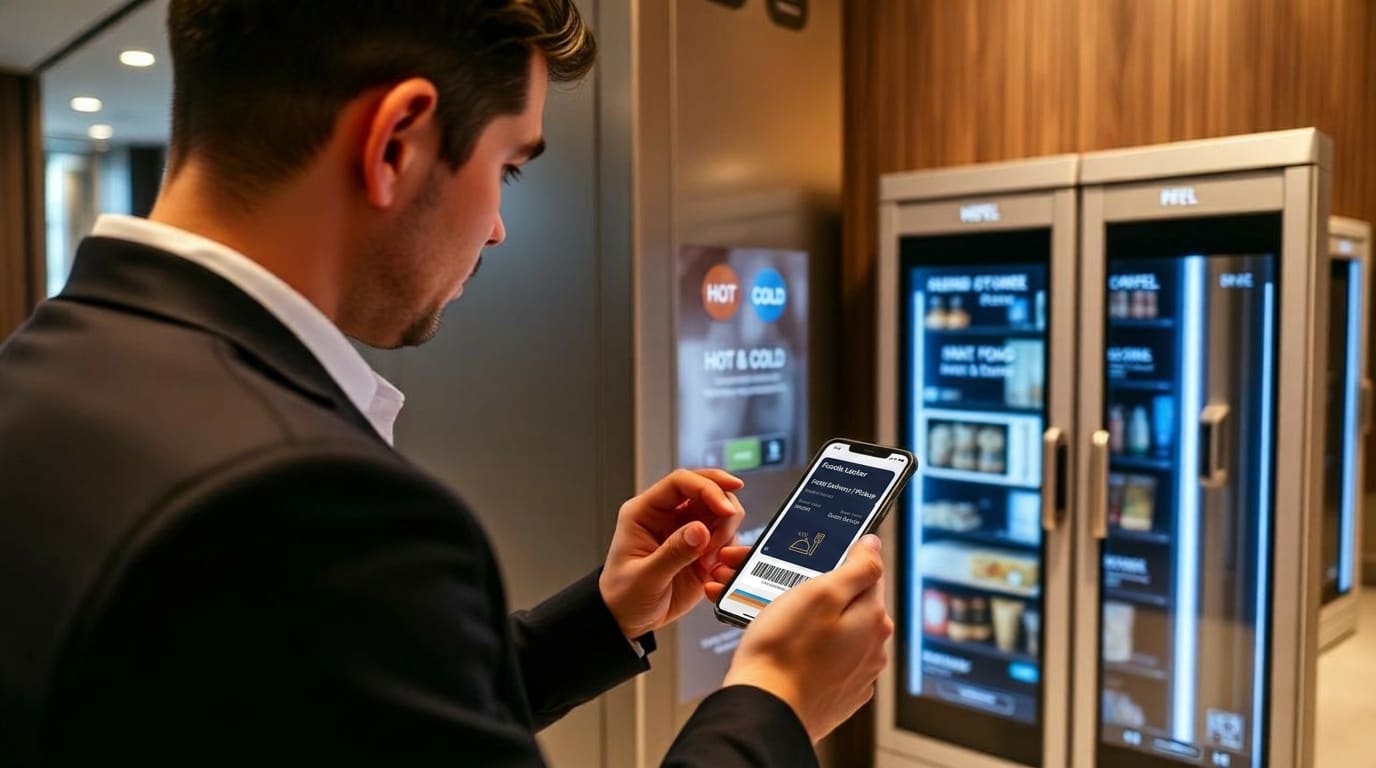
Standalone is the default starting point and the simplest commercial conversation. The locker sits in the lobby with its own touchscreen, its own QR code in every room, and its own SMS-based PIN flow. Guests scan, order from the delivery platform of their choice, receive a PIN by SMS when the courier drops, and collect.
Standalone needs no IT involvement from the hotel. There is no PMS integration, no app SDK, no single sign-on. The hotel signs the contract, Foodie Locker installs, and the system is live in days rather than months. For independent hotels, small groups and properties using legacy or heavily customised PMS, this is usually the right call.
Integrated deployment — branded experience inside the hotel app
For chains with their own guest app and a modern PMS, Foodie Locker integrates as a feature inside the existing experience. The 'Order food' tile in the Marriott Bonvoy, IHG One Rewards, Accor ALL or independent guest app opens a curated delivery view, the guest's room number authenticates the order, and the locker PIN is delivered in-app rather than by SMS.
On the back-end, Foodie Locker integrates with the major hotel PMS platforms (Opera, Mews, Cloudbeds, RMS, Guestline, Protel) to receive guest data securely, post charges to the room folio for hotel-billed deliveries, and surface delivery activity in the daily ops report.
What integration enables
- Single sign-on — guests don't create a separate account; the room key is the credential
- Hotel-folio billing for corporate guests using Deliveroo for Business or Uber for Business
- ID-on-file age verification for alcohol and age-restricted deliveries, using the booking record
- Loyalty-points earn-and-burn on delivery orders, where the chain operates a points programme
- Branded touchscreen and notifications — the locker feels like part of the hotel, not a third-party box
- Operational reporting fed straight into the PMS dashboard reception already uses
Choosing between the two
Three questions usually decide it.
- Does the property have its own guest app with meaningful adoption? If yes, integrated is worth the additional setup. If no, standalone is faster and just as good for the guest.
- Is the PMS one of the major modern platforms (Opera, Mews, Cloudbeds, etc.)? If yes, folio-posting and ID-on-file are realistic to enable. If the PMS is legacy or heavily customised, standalone avoids a long integration project.
- Is there a corporate-billed use case (business travellers, conference delegates, long-stay)? Integrated unlocks hotel-billed delivery on the folio, which is a meaningful revenue line and a guest-experience differentiator.
Most groups end up running both — standalone in independent and franchise properties, integrated in managed flagships. Foodie Locker supports the same hardware across both deployment models, so a property can start standalone and migrate to integrated without replacing equipment.
The technical integration surface
Foodie Locker exposes a documented REST API and webhooks for: guest provisioning (room check-in / check-out events), delivery events (courier drop, guest collection, forgotten collection), folio posting (charge to room), and reporting. SSO is supported via OAuth 2.0 / OpenID Connect. PMS integrations are maintained by the Foodie Locker integrations team for Opera, Mews, Cloudbeds, RMS, Guestline and Protel.
For more on the underlying delivery and security model see <a href="/blog/hotel-fb-smart-food-lockers-24-7-guest-dining" className="text-primary underline underline-offset-2">Hotel F&B without the kitchen</a> and <a href="/blog/replacing-hotel-room-service-deliveroo-foodie-locker" className="text-primary underline underline-offset-2">Replacing room service</a>. For integrations available out of the box, see the <a href="/solutions/integrations" className="text-primary underline underline-offset-2">Integrations Hub</a>.
Deployment timeline
A standalone deployment is typically live within 4–6 weeks of contract — most of that is hardware lead time and the physical install. An integrated deployment adds 4–8 weeks for the PMS and app work, depending on the platform and the hotel's IT cadence. Foodie Locker provides the integration team; the hotel typically provides a product owner, a PMS contact and an app release window.
To scope a deployment for a specific property or estate, <a href="/contact" className="text-primary underline underline-offset-2">book a demo</a>.