
Campus wayfinding and student experience: how universities turn navigation into belonging
Students and visitors judge a campus in the first ten minutes. This guide covers how universities and PBSA operators improve wayfinding, safety and the everyday experience across the estate — and why smart collection points are becoming campus landmarks.
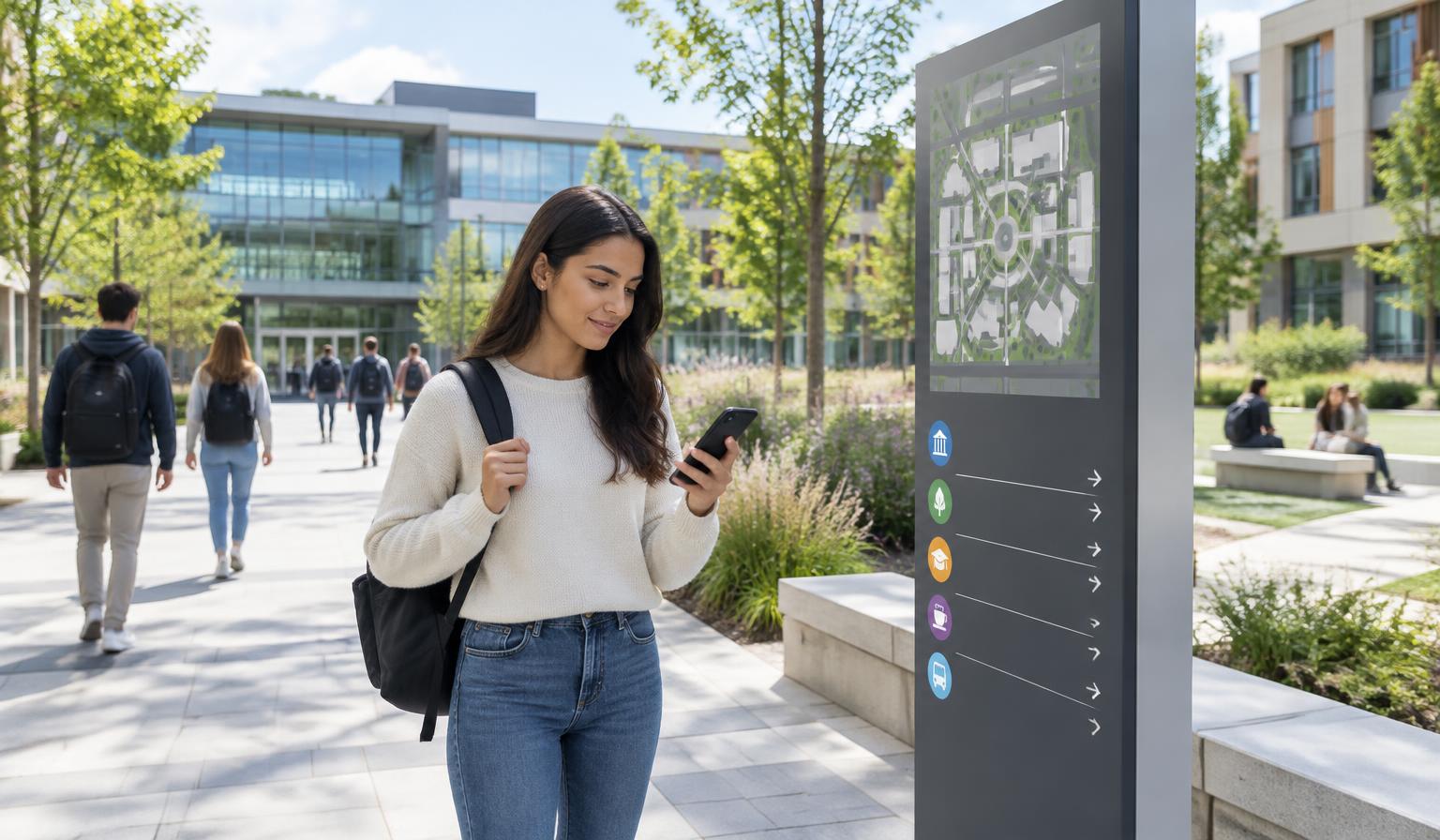
Students form their impression of a campus in the first ten minutes — and visitors, parents and prospective students even faster. Can I find my building? Do I feel safe walking here at night? Does this place feel like it was designed for me?
Wayfinding and everyday experience are where estates teams quietly win or lose student satisfaction, NSS scores and rebooking rates. This guide covers how universities and PBSA operators are improving all three — and why smart collection points are becoming the new campus landmarks.
Why wayfinding is an experience issue, not a signage issue
Poor wayfinding doesn't just cause lost freshers. It creates anxiety in week one, makes the estate feel hostile after dark, pushes couriers and visitors to wander corridors looking for the right block, and generates a steady drip of reception queries that eat staff time all year.
Good wayfinding is a system: clear sightlines, consistent naming, legible routes from the campus edge to the front door — and increasingly, digital guidance on the phone in the student's hand.
The everyday journeys that define campus experience
Students judge their campus on the journeys they make daily, not the architecture:
- Home to lecture and back — safe, well-lit, obvious routes
- Collecting food and parcels — the most frequent errand of the week, often late at night
- Finding friends, amenities and events — the journeys that build belonging
- Receiving visitors and deliveries — where security and welcome must coexist
Optimise these four flows and satisfaction follows — because you've improved the moments students actually repeat.
Smart collection points as campus landmarks
On campuses where smart food and parcel lockers are installed, something interesting happens: the locker station becomes a landmark. 'Meet me at the lockers' is a natural rendezvous point — it's lit, CCTV-covered, busy at all hours and on every student's mental map.
That has a real safety dividend. The places students walk to at night are active, monitored and populated. Collection journeys become natural surveillance routes — the opposite of isolated cut-throughs.
It also fixes a wayfinding failure every campus knows: couriers roaming the estate looking for block C. One verified destination per building ends the wandering, the buzzing and the door propping.
Designing the estate for safety after dark
Students' sense of safety at night shapes everything from retention to review scores. The operators getting this right combine:
- Lit, legible primary routes — one obvious safe way home, not five ambiguous shortcuts
- Active ground floors and collection points along those routes — people and light where students walk
- Automated delivery infrastructure — so late-night food runs end at a monitored hub, not a corridor
- Verified access and audit — so strangers never need to enter buildings to complete a delivery
Each element reinforces the others: wayfinding moves students along safe routes, and the destinations on those routes are the busiest, best-monitored spots on campus.
Measuring experience across the estate
Campus experience work pays back in metrics estates teams already report:
- Reception and helpdesk query volume — wayfinding failures show up here first
- Rebooking and retention — belonging built through daily journeys drives renewal
- Student satisfaction and NSS — 'I feel safe' and 'it's easy to get around' are scoreable statements
- Courier and visitor incidents — should trend to near zero once delivery is automated
Explore our student campus solution, the campus security cost guide, or book a walkthrough to see how this works across an estate.