
Virtual concierge vs human concierge: cost, coverage and what residents actually notice
A side-by-side comparison of virtual concierge and human concierge models for UK apartment buildings, BTR and co-living. Real cost numbers, 24/7 coverage maths, resident-experience trade-offs and the hybrid model most operators end up running.
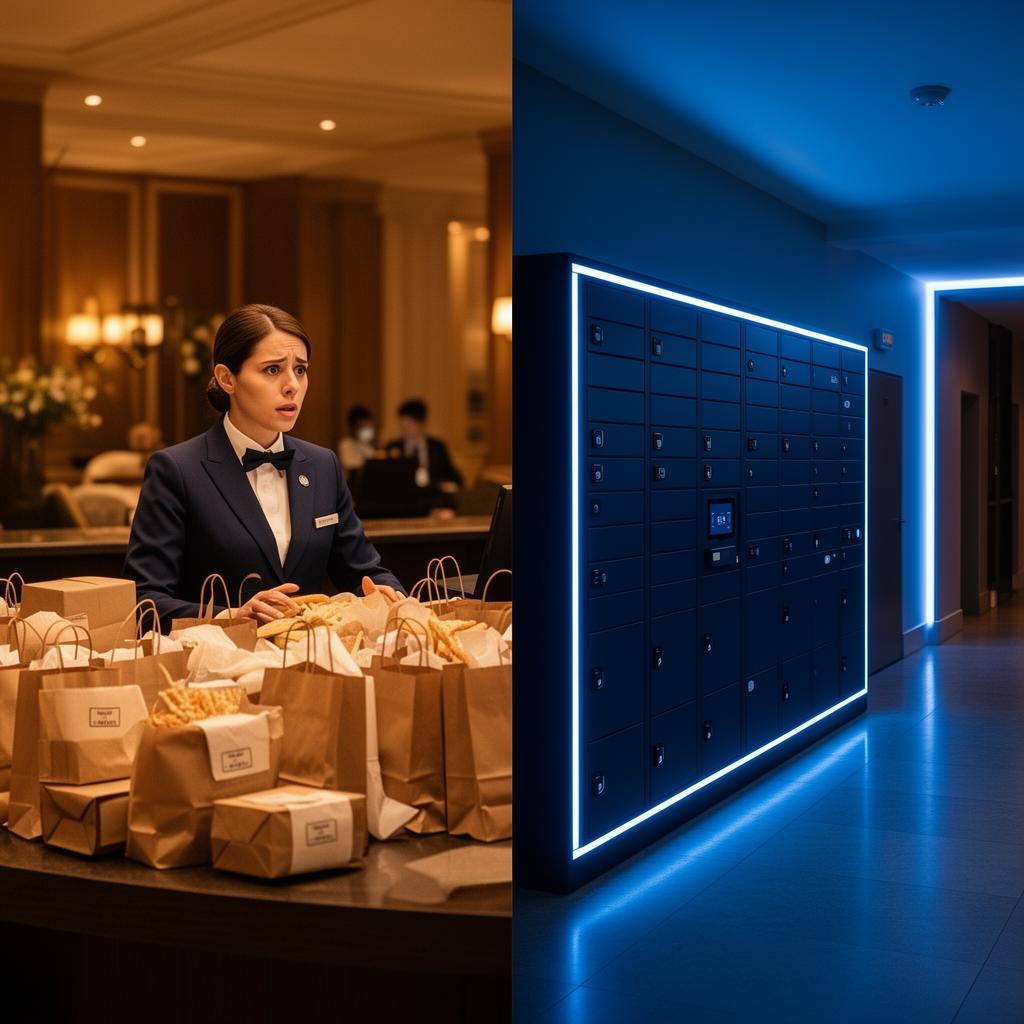
Virtual concierge has gone from niche PropTech to a serious line item in UK apartment building, BTR and co-living operating models. The reason is simple: a 24/7 human concierge costs £180,000–£240,000 a year fully loaded, and operators have started counting how much of that day is spent triaging Deliveroo bags rather than serving residents. This article is the honest side-by-side: cost, coverage, resident experience, and what most operators end up actually running — which is rarely 100% of either.
What 'virtual concierge' actually means in 2026
Virtual concierge (sometimes called digital concierge or remote concierge) is the umbrella term for a mix of remote human agents, smart-locker handoff, intercom video answering, resident-app concierge messaging and on-site self-serve kiosks. It is not a chatbot. The best implementations route the resident or visitor to the right channel — a remote human for genuine concierge requests, a smart locker for deliveries, the resident's own app for service bookings — and quietly automate the 60–70% of interactions that never needed a human standing behind a desk in the first place.
Coverage maths: where the cost lives
A single concierge head working 40 hours a week gives you 23.8% of 24/7 cover. To run a desk staffed every hour of every day you need roughly 4.2 FTEs once you cover holiday, sickness and breaks. At a fully loaded UK rate of £45,000–£55,000 per head (salary, employer NI, pension, uniform, training, agency cover), that's £180k–£240k a year, before the cost of the desk itself.
Virtual concierge inverts the cost structure. A shared remote concierge centre amortises the human cost across many buildings, smart lockers handle deliveries with zero marginal cost per drop, and the on-site presence is right-sized to the hours that genuinely need a face. Typical operator outcomes are 40–60% lower front-of-house OpEx and equal or better 24/7 coverage.
What residents actually notice
Residents don't grade the concierge model. They grade outcomes: was my food hot, was my parcel safe, did someone respond when I needed help at 11pm, did the lobby feel calm. The honest finding from BTR resident surveys is that residents prefer hybrid: a real human on-site during peak hours (mornings, evenings, weekends), and reliable self-serve and remote-human cover for the rest. What they hate is the in-between state — a human concierge who is technically there but buried under delivery bags and unable to help.
Side-by-side comparison
| Dimension | Human (24/7) | Virtual | Hybrid (typical) |
|---|---|---|---|
| Annual cost | £180k–£240k | £25k–£60k | £80k–£130k |
| 24/7 cover | Yes | Yes (remote + locker) | Yes |
| Peak-hour face | Yes | No | Yes |
| Delivery handling | Manual triage | Locker automation | Locker automation |
| Audit trail | Paper logbook | Full digital | Full digital |
| Resident NPS impact | Neutral / negative when overloaded | Neutral | Positive |
What gets automated first (and why deliveries top the list)
In every operator survey we've seen, food and parcel handling is between 30% and 45% of the on-site concierge day. It's also the easiest task to automate cleanly: deliveries arrive on a predictable distribution curve, the workflow is identical every time, and a perimeter-accessible smart locker bank removes the entire interaction from the desk. Automating deliveries first frees the human concierge to do everything residents actually value — wayfinding, parcel exceptions, contractor sign-in, building knowledge, the human touch at peak.
The hybrid model most UK BTR operators end up running
After three years of operators trying both extremes, a clear consensus model has emerged for UK BTR and large residential: a single on-site concierge for the 6–8 peak hours each day (typically 7–10am and 4–9pm), a perimeter smart locker bank handling 100% of food and grocery deliveries 24/7, parcels via a parcel-locker layer, and a remote video-concierge service covering everything outside peak hours. Total OpEx lands around £80k–£130k a year per building, versus £180k–£240k for the staffed-24/7 model, with measurably higher resident NPS because the peak human cover is no longer drowning under delivery bags.
Estimate the ROI for your building or book a 15-minute demo to scope the hybrid model.