Smart Food Lockers for Contract Catering: Extend the Offer Beyond Core Hours
A practical guide for catering contractors in hospitals, workplaces and campuses: internal click-and-collect, approved external partners and a measurable pilot.
A catering contractor is responsible for the food offer delivered to a client’s site, not necessarily for owning that hospital, workplace or university campus. The brief is to provide choice, convenience and value for the people using it — including those whose working or studying day extends beyond the main serving hours.
Smart food lockers can add a collection layer to that operation. The strongest model starts with your own catering service, then considers approved external food provision where it fills a genuine gap. It complements the contracted offer rather than bypassing it.
Extend access, not the entire kitchen operation
Keeping a full counter and kitchen staffed for every shift is a different commitment from making freshly delivered orders available for collection. Lockers let you separate preparation and delivery from the final handover.
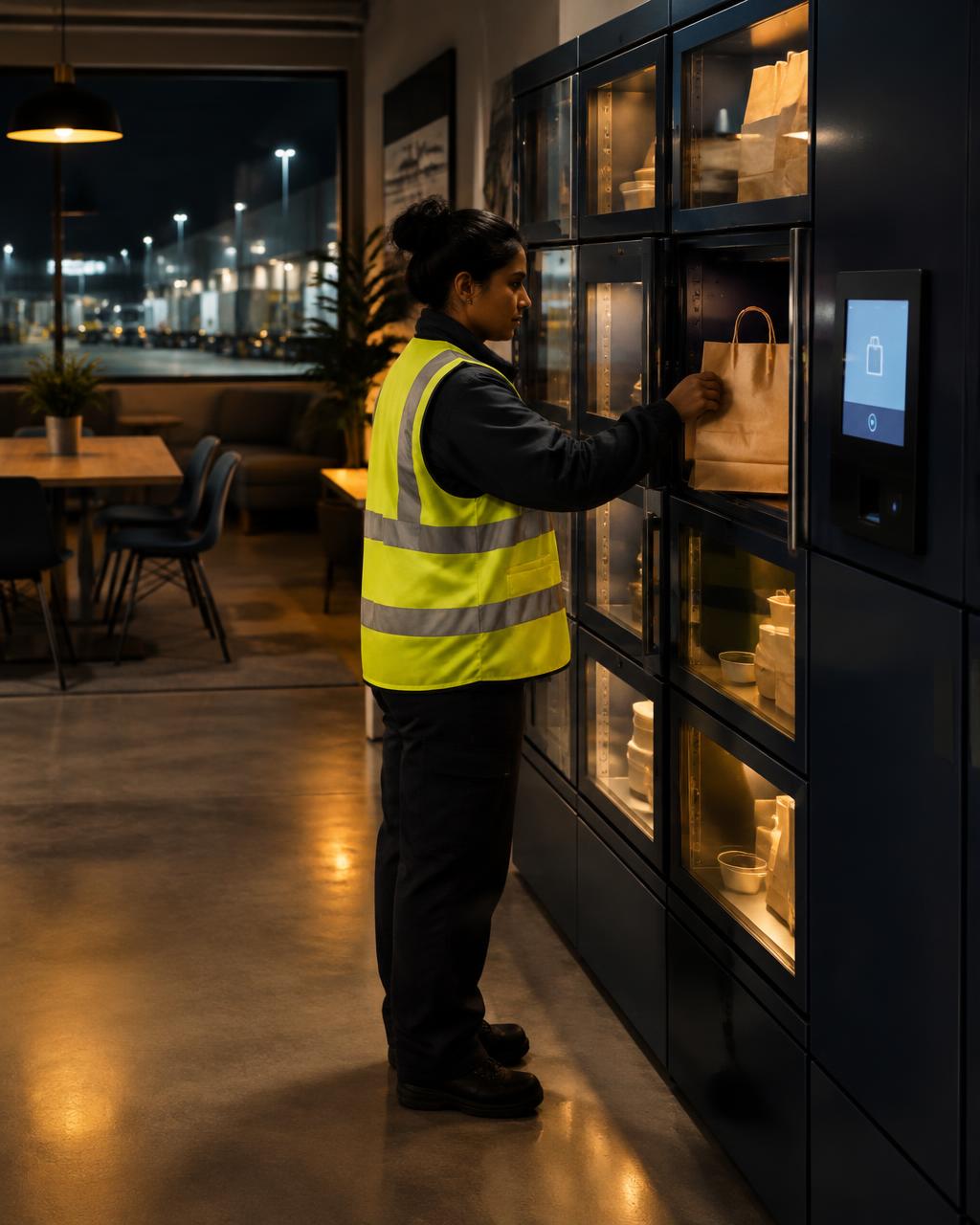
A hospital could use an agreed collection point for staff meals around shift changes. A workplace could distribute pre-ordered lunches without a manual handout desk. A campus could support evening students after the main outlet closes. These are possible operating models, not claims about existing Foodie Locker deployments.
Use case one: your catering, collected conveniently
People order through your existing channel. Your team prepares the food, identifies the recipient and places each order into a compartment. The recipient receives a collection code and picks up within the agreed window.
That separates collection from the main queue and reduces the need to locate each recipient personally. It does not remove preparation, loading, cleaning or customer support. Those responsibilities must remain in the service plan.
Use case two: approved external orders beyond core hours
Your kitchen does not have to produce every cuisine at every hour for the site to offer more choice. Approved restaurants, off-site kitchens or delivery partners can bring fresh orders to the same collection point when they meet the client’s requirements.
Begin with the client contract. Check exclusivity, permitted suppliers, access hours, payment arrangements and responsibility for late or missing orders. External food should fill an agreed gap, not quietly compete with or undermine the catering operation. A locker does not itself create a partnership or connect every delivery platform.
A broader food offer for your site
A site’s food offer can combine on-site catering, pre-ordered meals and approved external deliveries. A shared collection point lets you plan these services around the needs of your customers, rather than relying on one staffed counter for every handover.
Start with your existing catering operation, identify gaps in access or choice, and agree how complementary services could fill them. Keep the client’s requirements, supplier permissions and operating responsibilities at the centre of the plan.
Keep food safety and site access in the design
Foodie Locker compartments are insulated, not heated or refrigerated. Access outside core hours does not mean that meals can wait safely overnight. Plan fresh deliveries and short collection windows appropriate to each food, agreed with the responsible food-safety team.
- Keep allergen and menu information available through the ordering and fulfilment process.
- Define uncollected-order checks, removal and disposal responsibilities.
- Place the collection point where permitted suppliers can reach it without entering restricted areas.
- Agree cleaning, packaging, accessibility and escalation procedures before launch.
Hospital staff food provision is distinct from patient catering. Do not extend the service into clinical diets or patient meal pathways without the relevant hospital approvals.
Build a business case rather than promise savings
Measure current handover work and demand by service window, then compare them with the proposed operation. Include hardware, software, integration, loading, cleaning, support and any supplier or delivery charges. A reduction in counter handovers is not automatically a reduction in paid staffing hours.
Foodie Locker supports collection; your ordering and payment system remains separate. Where a connection is required, technical assessment and a separately scoped integration may carry an additional cost.
For a pilot, select one site and one clear problem: peak collection queues, shift-worker access or an evening menu gap. Track order volume, collection time, staff handling time, uncollected meals, satisfaction and full operating cost. Agree success criteria with the client before expanding across the estate.
Explore Foodie Locker for catering contractors, including internal collection and approved external provision across hospitals, workplaces and university campuses.