Selling Lockers Overseas: What to Check Before Shipping a Unit Internationally
The practical checks before a food locker crosses a border: power, connectivity, language, support and local regulations.
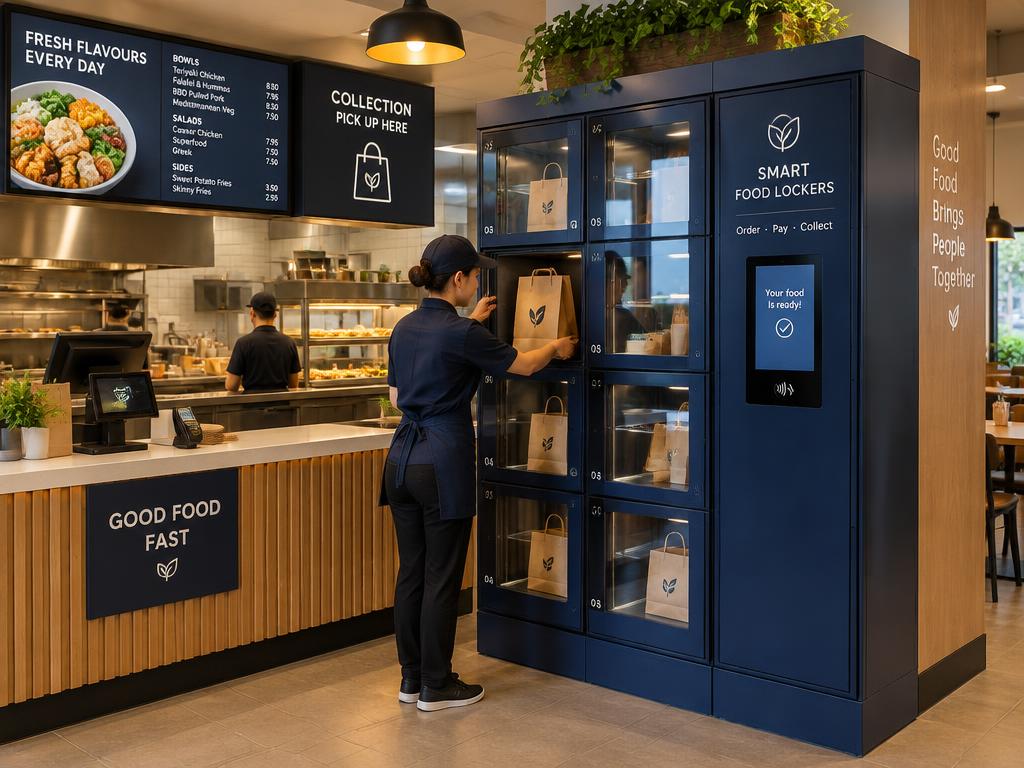
Food delivery is a global habit, and the problems lockers solve — lobby congestion, cold food, overwhelmed front desks — exist in every market. So it is natural that interest in smart food lockers arrives from well beyond the UK.
But a locker is not a parcel you post. It is a connected, powered, software-driven unit that has to work reliably in its new home. Before a unit crosses a border, these are the checks that matter.
Power and physical requirements
Lockers need mains power, and electrical standards differ by country — voltage, plug type and certification requirements all vary. The unit's specification needs to match the destination, and in many markets electrical equipment must carry local certification before it can be installed.
Physical logistics matter too: locker banks are heavy, flat-packed or palletised shipments. Access at the destination — doorways, lifts, floor loading — should be confirmed before anything ships, not after it arrives.
Connectivity and software
A smart locker is only smart when it is connected. Check how the unit connects to the internet at the destination — wired, Wi-Fi or cellular — and whether the software platform operates reliably in that region, including notifications by SMS and email, which can behave differently country to country.
Language is part of this check. The locker screen and the notifications should speak the language of the people using them.
Support across the distance
The most important question is what happens when something needs attention. Who installs the unit? Who is first line if a customer has a problem? How do spare parts travel, and how long does that take?
This is why international deployments usually work best with a local partner on the ground — someone who can install, support and represent the service in market, backed by the manufacturer's remote support. It is the thinking behind our licensing model and our approach to international customers.
Regulations and the practical checklist
Before committing to an overseas deployment, work through:
- Electrical certification and compliance requirements in the destination country
- Import duties, shipping costs and realistic lead times
- Data protection rules that apply to the software platform in that market
- Local installation and ongoing support arrangements
- A pilot plan — one site, proving the model before scaling
None of these are obstacles — they are simply the difference between a deployment that works and one that struggles. If you are considering lockers outside the UK, start the conversation early and we can work through the checklist together.