What millennial and Gen Z hotel guests actually want from F&B: the data behind the Deliveroo demand
67% of millennials say they'd be more likely to book a hotel that lets them order takeaway in-room. Gen Z is even higher. This is the demographic story behind the shift — and what hoteliers should do about it before competitors do.
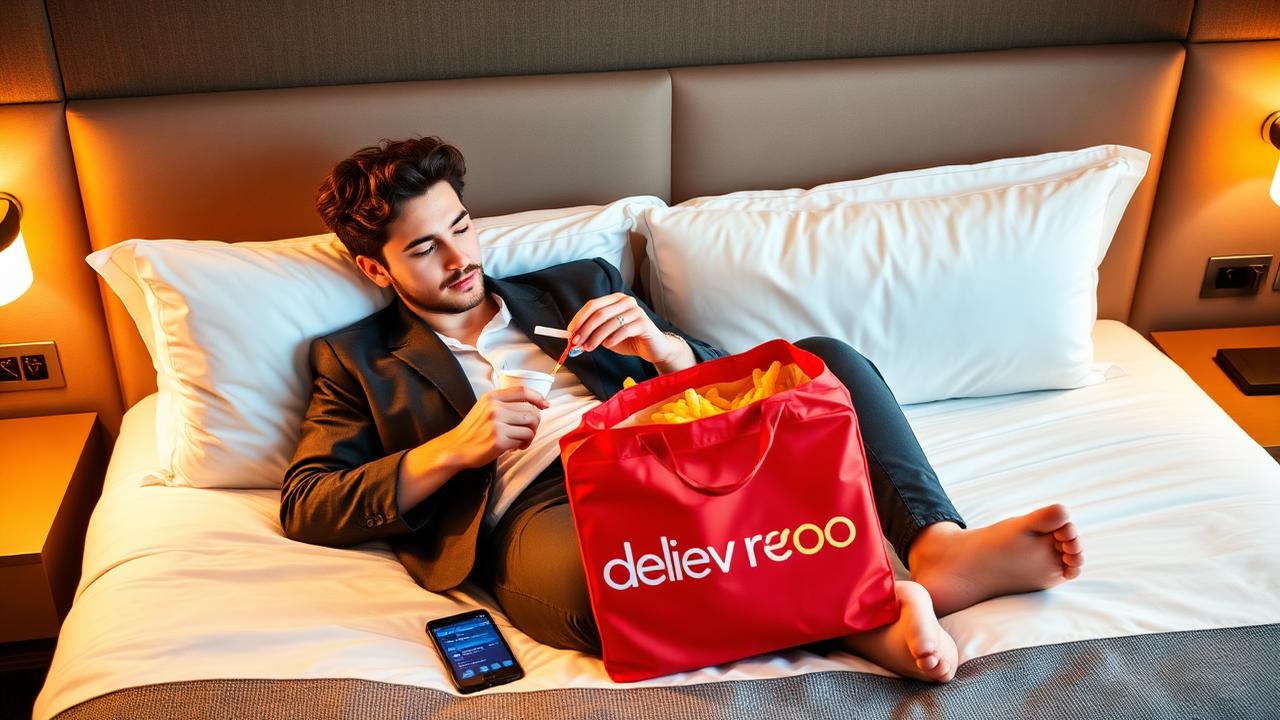
Two-thirds of millennials say they'd be more likely to book a hotel that lets them order takeaway in-room. Gen Z's number runs higher again. This is no longer a fringe behaviour — it's a booking-decision feature for the demographics that drive city-break, leisure and bleisure demand.
Hotels that ignore it pay a quiet conversion tax. Hotels that lean in turn it into a differentiator on Booking.com, in influencer content and in repeat-guest data.
What the data actually shows
EP Business in Hospitality found 67% of millennials would be more likely to book a hotel that accepts third-party food delivery. Boutique-hotel operators describe a parallel pattern in their own data: guests under 40 over-index on delivery acceptance, in-room snacking and late-night ordering, and under-index on traditional room service and full sit-down restaurant dinners.
Why this generation behaves differently
Three reinforcing habits drive it:
- Delivery is the default at home — Deliveroo and Uber Eats are weekly behaviours, not occasional treats
- The phone is the menu — there is no scenario in which a paper room-service folder beats the app a guest already has open
- Travel is for the neighbourhood, not the hotel — guests pick the city for its food scene, not for the hotel's signature steak
A hotel that frictionlessly accepts what guests already do every day at home wins the small-but-decisive comparison moment at booking.
Where the friction breaks the experience
Even when hotels tolerate delivery in principle, the experience often fails in practice. Common failure points: reception refuses to call the room; courier wanders the corridor; guest comes down to a cold bag on the desk; another guest is queueing at the same desk to check in. The booking-decision feature becomes a stay-rating problem.
The fix is operational, not philosophical. A secure 24/7 handoff layer — typically a Foodie Locker in or near reception — turns it into a non-event. See the full pattern in <a href="/blog/replacing-room-service-third-party-delivery" className="text-primary underline underline-offset-2">Replacing room service</a>.
What this means for booking conversion and reviews
Hotels that explicitly state their delivery policy in pre-arrival comms and on the booking page see higher younger-demographic conversion and meaningfully better in-stay reviews on F&B, value-for-money and convenience axes. The reverse is also true — surveys consistently show 'wouldn't help with delivery' as a recurring negative-review theme on lifestyle and boutique properties.
What to put in the policy
A working modern delivery policy has four lines:
- Yes, guests can order from any food delivery platform during their stay
- Couriers drop into a secure 24/7 smart locker in reception — no corridor access required
- Guests get notified instantly and collect with a PIN or QR code
- The bar and minibar are available for matching drinks, snacks and late-night extras
Communicate it. Don't bury it. It's a positive booking feature, not a tolerated workaround.
The downstream commercial effect
Operators report three commercial effects when a clear delivery-friendly policy plus locker handoff is rolled out: increased booking conversion on younger demographics, increased beverage and snack attach to delivered orders, and reduced reception friction at peak meal times. That combination shows up directly in RevPAR per available labour-hour, which is the only F&B KPI most modern hotels actually care about.
Want to scope this for a specific property? <a href="/contact" className="text-primary underline underline-offset-2">Book a demo</a>.