How to License a Smart Food Locker Business in Your Territory
What a food locker licensing model involves, who it suits, and the questions to ask before taking on a territory.
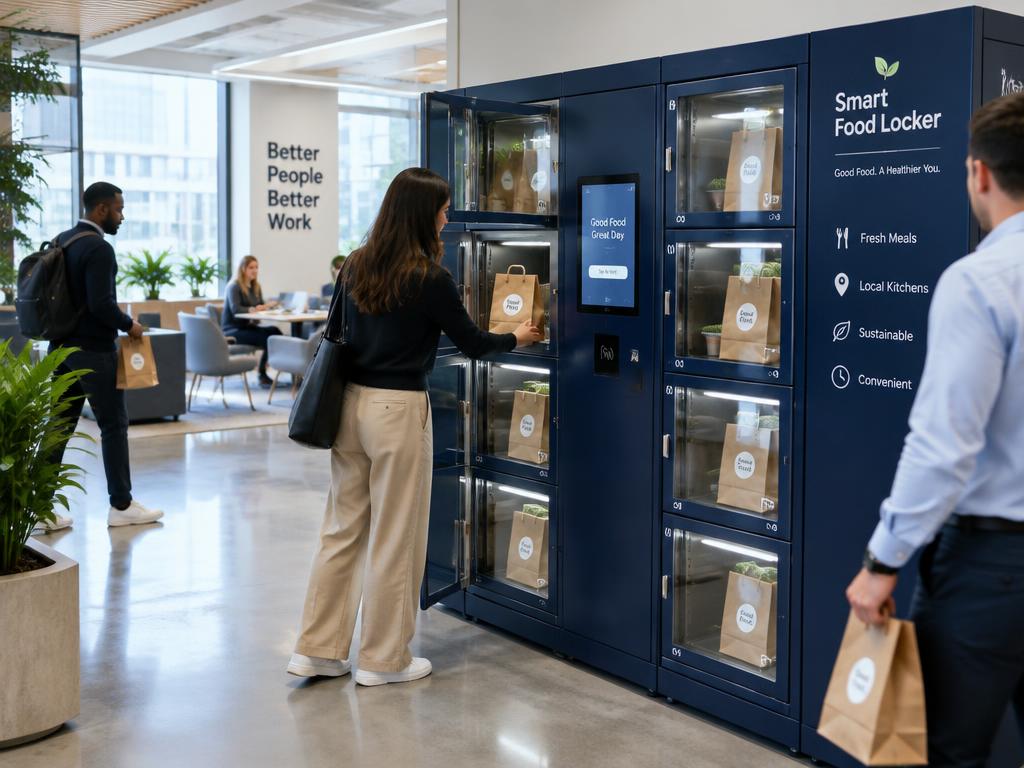
Smart food lockers are a proven product, but they are still new in most markets. That gap is exactly what a licensing model is for: instead of building the hardware, software and operating playbook from scratch, a licensee takes an established system into a territory the manufacturer does not yet serve directly.
This article explains how food locker licensing typically works, who it suits, and the questions worth asking before you commit to a territory.
What a licensing model actually gives you
A licence is more than permission to sell a product. In a well-structured arrangement, the licensee gets the complete package: the locker hardware, the cloud software that runs it, the brand, and the operating knowledge — how to site units, price services, onboard buildings and support customers.
In return, the licensee takes responsibility for the territory: finding customers, managing installations, and being the local point of contact. The manufacturer concentrates on product development; the licensee concentrates on their market.
Who licensing suits
Licensing tends to suit people and organisations that already have something the manufacturer lacks locally:
- Existing relationships — property operators, facilities managers, restaurateurs or investors who already trust you
- Local market knowledge — how buildings are managed, who makes purchasing decisions, and what buyers expect
- Operational capacity — the ability to coordinate installation, and to be first line when a customer needs help
- A territory worth having — enough residential, student, workplace or hospitality stock to build a real business on
It suits people who want to run a business, not just resell a box. The recurring value in lockers comes from the service around them, not the one-off sale.
Questions to ask before taking a territory
- Is the territory exclusive, and how is it defined — by country, region or sector?
- What support does the manufacturer provide — training, marketing materials, technical backup, software updates?
- Who owns the customer relationship and the ongoing service revenue?
- What are the minimum commitments, and what happens if the market develops more slowly than expected?
- How are spare parts, warranty claims and hardware issues handled across the distance?
Good licensors welcome these questions. If the answers are vague, that tells you something important about how the relationship will run.
How Foodie Locker approaches it
Foodie Locker works with licensing partners in territories outside its direct market. The model is built around the partner succeeding locally: we provide the lockers, the software platform and the operating playbook, and the partner builds the business in their territory. You can read more on our licensing page, or get in touch to talk through a specific territory.