Food Delivery Lockers in Germany: Packstation Culture Meets Hot Food
Germany already embraces parcel lockers at scale. Here's why food delivery lockers are the natural next step for German residential and workplace buildings.
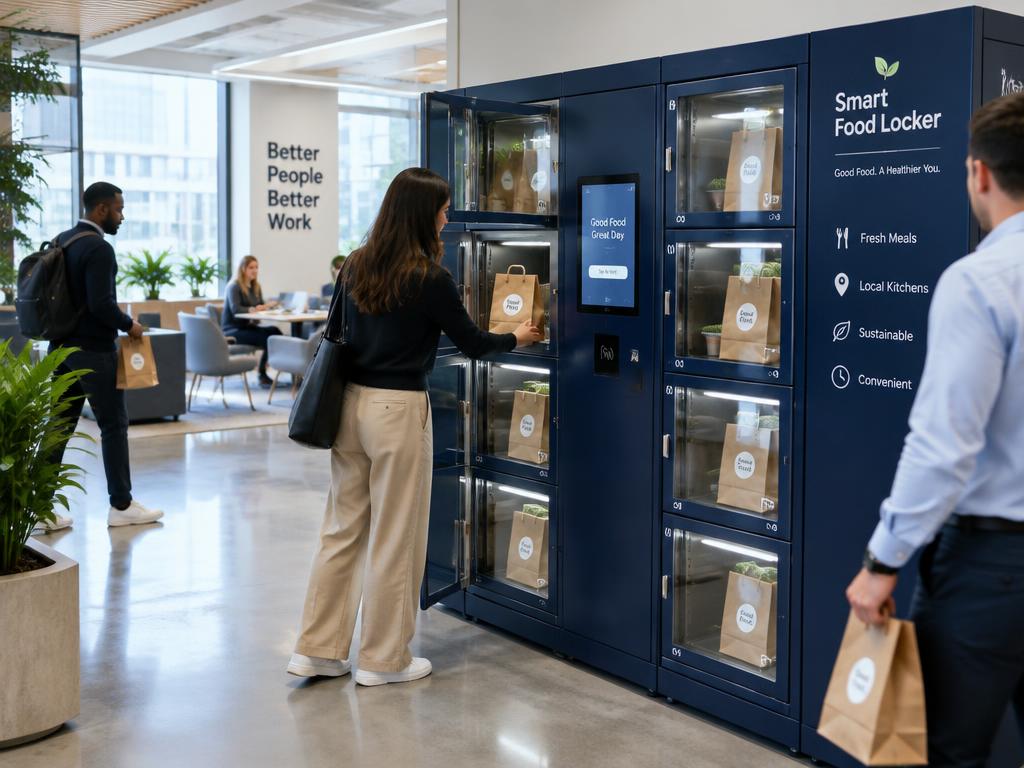
Germany already understands lockers. Parcel lockers — Packstation and its competitors — are part of everyday life, and German consumers are comfortable collecting from a bank of compartments with a code. Food delivery is the obvious next category.
What's missing is the food-specific layer: insulated compartments, one-time codes, and integration with how residential and workplace buildings actually run. That's where smart food lockers come in.
A market pre-trained on lockers
In most countries, operators have to explain what a locker is. In Germany, the behaviour already exists — residents collect parcels from lockers as a matter of routine. Introducing food lockers into a German building is an extension of a habit, not a new one, which makes adoption unusually fast.
Where lockers fit in Germany
- Residential buildings and Wohnanlagen — managed food delivery without Hausmeister involvement
- Office buildings and business parks — structured lunch peaks in Berlin, Munich, Frankfurt, Hamburg and beyond
- Student housing and campuses — high-volume, late-evening demand
- Restaurants and Lieferdienste — rider pickup without the counter queue
What German operators should check
German deployments should confirm German-language interfaces and notifications, data protection expectations (GDPR compliance is table stakes for any German building technology), and a support model that works in German time zones. Foodie Locker's platform is built with these requirements in mind.
Foodie Locker works with partners and operators in Germany. If you are exploring smart food lockers for a building, campus, workplace or restaurant group there, read about our licensing model or get in touch to talk through your territory.