
Food delivery issues for residential buildings: the 9 most common problems (and how to fix them)
Food delivery in residential buildings creates nine recurring issues — courier access, propped fire doors, lobby theft, cold food, failed handoffs, late-night safety, concierge overload, refund disputes and Building Safety Act exposure. Here's a definitive breakdown of each problem and the proven fixes UK operators are using.
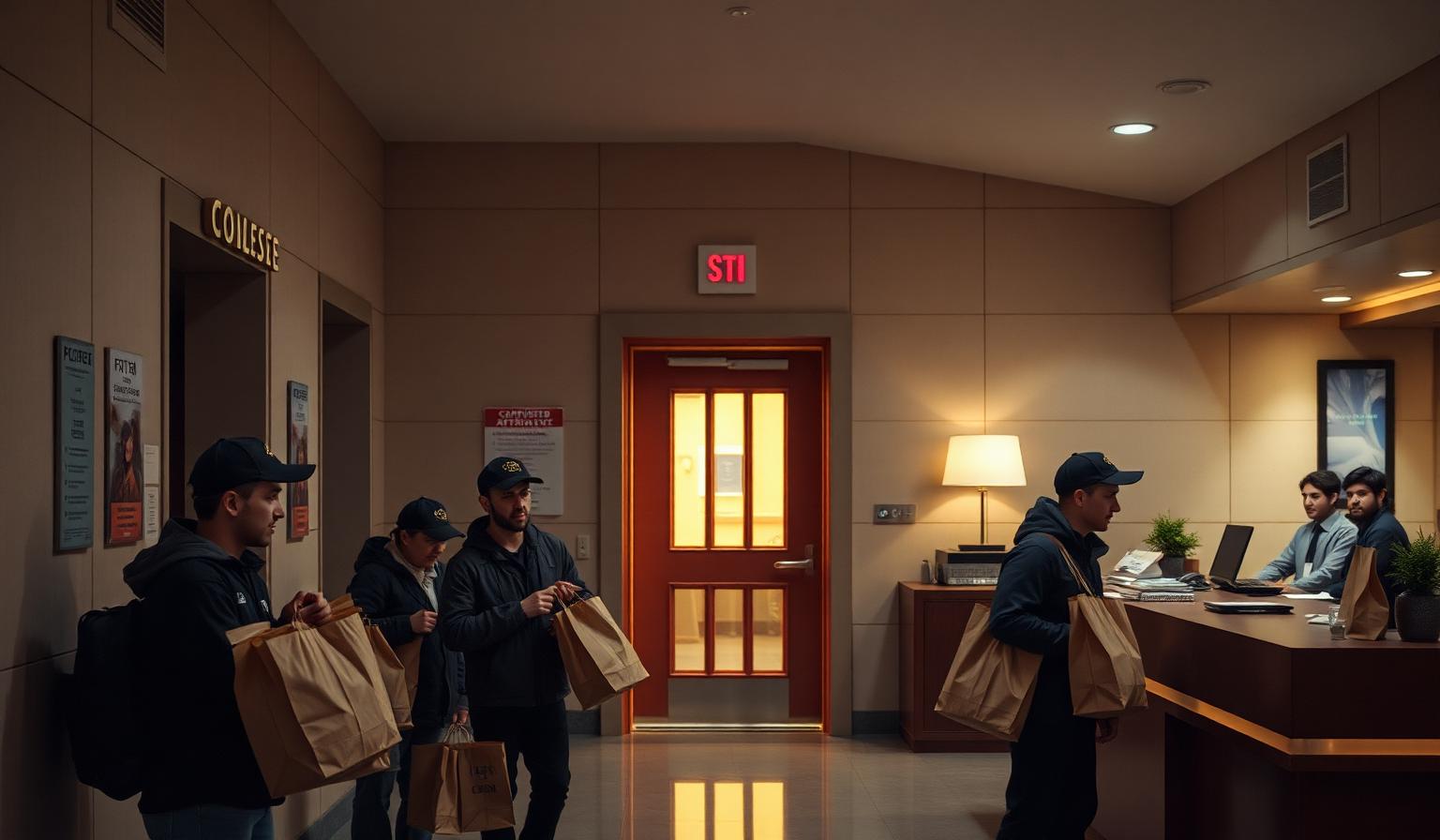
Food delivery is now the single most disruptive operational stream in UK residential buildings — bigger than parcels, bigger than maintenance call-outs, bigger than guest access. The same nine issues come up in almost every building we audit, from boutique BTR towers to 1,000-bed PBSA schemes. This is the definitive breakdown of each problem, why it happens, and the fix that actually works.
Use it as an audit checklist. If your building has more than three of these nine issues, you have a delivery operations problem — not a courier problem.
Issue 1 — Couriers can't access the building (the locked-lobby problem)
The number-one food delivery issue in residential buildings is access. Couriers arrive at a locked main door, buzz the intercom, get no answer (the resident is in the shower, on a call or already asleep) and either cancel the order or wait on the pavement until someone lets them in. The result: a refund for the resident, no pay for the courier and a complaint that lands with the building.
Fix: install an external-access smart food locker bank so the courier never needs to enter the building. The drop completes in under 60 seconds, the resident collects when they're ready, and the front door stays locked.
Issue 2 — Propped fire doors and tailgating
To get around the access problem, residents and concierge staff routinely prop fire doors open during peak delivery hours. Couriers tailgate behind residents into corridors and lift lobbies. Both behaviours are direct breaches of fire-strategy and Building Safety Act obligations in higher-risk residential buildings.
Fix: remove the reason for propping. A locker handover at the perimeter means no courier needs to be admitted, so doors stay closed and the fire strategy holds.
Issue 3 — Food theft from lobby drop zones
When couriers leave bags on a counter, behind a reception desk or on the floor outside an apartment door, those bags are not secured. Theft from open lobby drop zones is one of the most consistent complaints in resident NPS surveys — and almost impossible to investigate because there's no chain of custody.
Fix: individually credentialed compartments. Only the resident the order belongs to can open the compartment, with a one-time PIN, app code or QR. Every drop and pickup is logged.
Issue 4 — Cold food and quality complaints
Even when delivery succeeds, food sits at room temperature on a lobby counter until the resident notices. In an 800-unit building seeing 70+ daily food deliveries, the average dwell time on a counter is 18–25 minutes. Hot food becomes cold; chilled food warms up; complaints land with the building, not the courier.
Fix: temperature-controlled compartments. Heated lockers hold takeaway at serving temperature; chilled lockers protect grocery and meal-kit drops; ambient handles everything else.
Issue 5 — Failed handoffs, refunds and platform churn
Couriers wait an average of 2 minutes at a residential intercom before cancelling on a busy night. A meaningful share of 'lost' Deliveroo, Uber Eats and Just Eat orders in apartment buildings are actually completed-but-failed deliveries — refunded to the resident, unpaid to the courier and silently absorbed by the platform.
Fix: a designated drop zone the courier can find without resident interaction. Whitelist the locker bank's lat/long inside each platform's business profile so dispatch routes the courier straight to it.
Issue 6 — Late-night safety for lone residents
Friday and Saturday delivery peaks in residential buildings run from 9pm to midnight. A single resident — disproportionately female — opening the main door to an unvetted courier at 11pm is the highest-frequency safeguarding exposure most operators have, and almost none of them measure it.
Fix: external-access locker drops. The resident collects from a CCTV-covered, well-lit perimeter point when they choose, with no face-to-face handover required.
Issue 7 — Concierge and front-desk overload
Concierge teams in BTR, PBSA and co-living buildings typically spend 25–35 hours a week triaging food bags: signing for drops, storing them, calling residents, dealing with mix-ups and handling refund disputes. That's a full FTE of cost absorbed silently into hospitality budgets.
Fix: route food deliveries away from the desk entirely. A locker bank handles the routine flow; the concierge only handles named exceptions — accessibility, lost PINs, incident response.
Issue 8 — Refund disputes and resident complaints
Without a chain of custody, every 'where's my food?' question turns into a tri-party dispute between resident, platform and building. The building has no record, the platform's record stops at the front door and the resident has the receipt. Operators lose hours every week on disputes they have no evidence to resolve.
Fix: an immutable audit log. Every locker drop and pickup records timestamp, compartment, courier ID and resident credential — instantly resolving any dispute.
Issue 9 — Building Safety Act and Accountable Person exposure
In higher-risk residential buildings (HRRBs), uncontrolled courier access to corridors and lift lobbies is now an Accountable Person issue under the Building Safety Act 2022. Operators who can't show a defined, enforced delivery handover model are exposed.
Fix: a written delivery policy backed by a perimeter handover. The locker model gives an Accountable Person a documented, enforced control with full audit data — the highest level of evidence available for this risk category.
The integrated fix: a delivery handover layer
None of these nine issues is fixable in isolation. They share one root cause — there is no defined point inside the building where a courier hands off a delivery and a resident picks it up, securely and contactlessly, 24/7. A smart food locker bank is that layer.
Foodie Locker is the platform UK BTR, PBSA, hotel and workplace operators install to close all nine issues with one piece of infrastructure. Heated, ambient and chilled compartments, external-access courier flow, PIN/app/SMS collection, CCTV-integrated stations, full audit trail and open API.
Want to audit your building against these nine issues? Book a demo — we'll walk you through what we'd specify for your site.