
Measuring ESG impact: how smart lockers cut carbon, waste and reporting headaches for asset owners
Real estate owners and operators are under growing pressure to evidence — not just claim — measurable ESG progress. Smart food and parcel lockers consolidate failed deliveries, cut courier mileage, eliminate single-use packaging waste and produce the auditable data ESG frameworks (GRESB, SBTi, CRREM, EPRA sBPR) actually require. Here's how the numbers stack up.
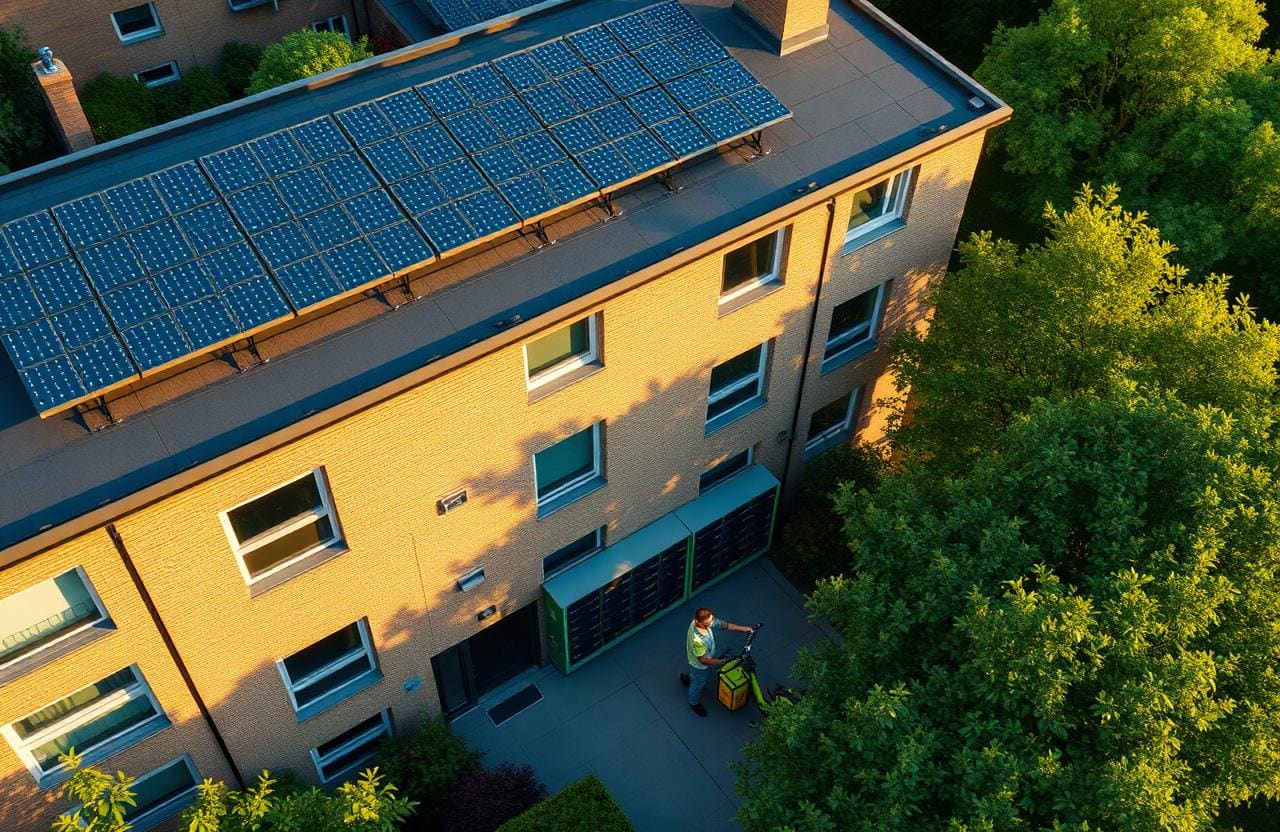
Real estate owners and operators are no longer being asked whether they have an ESG strategy — they're being asked to evidence it. GRESB scoring, SBTi-aligned net-zero targets, EPRA sBPR disclosure, BREEAM In-Use credits, CRREM stranding-risk pathways and increasingly tenant-led ESG questionnaires all share one thing in common: they want auditable, building-level data, not glossy claims.
Most of that pressure has so far landed on energy, water and embodied carbon. The next frontier — and one that's notably under-measured — is the operational footprint of the deliveries flowing into the building every single day. Food, grocery, parcels and meal kits each generate scope 3 emissions, packaging waste and operational drag that asset owners are now expected to quantify. Smart lockers are one of the few interventions that simultaneously reduce that footprint and produce the data needed to report it.
Why deliveries are now an ESG line item
A typical mid-size BTR or PBSA building now receives 40–80 inbound deliveries per day across food, parcels, groceries and subscriptions. Each one carries a measurable carbon, waste and operational cost — and historically none of it has been counted on the building's ESG balance sheet. That's changing fast.
- GRESB now rewards operators who can evidence scope 3 reductions across tenant-driven activity, not just landlord energy
- EPRA sBPR disclosure increasingly expects operational waste reporting beyond bin weights
- CRREM pathways flag operational drag (concierge hours, repeat trips, returns logistics) as stranding risk for assets unable to scale into 2030
- Tenant ESG questionnaires from corporate occupiers now ask about last-mile emissions and packaging policies
If the building can't measure delivery-side emissions and waste, it can't reduce them — and increasingly, it can't score for them either.
The carbon maths of a failed delivery
Failed deliveries are the single biggest hidden carbon source in residential and student buildings. When a courier can't access the building, can't find the right core, or no one's home for a chilled delivery, the parcel goes back to depot and re-attempts another day. Industry data from the IMRG and the Last Mile Research Centre puts UK first-time delivery failure at 5–12% depending on building type — significantly higher in dense urban towers and PBSA over holiday periods.
Each failed attempt typically generates an additional 0.18–0.45 kg of CO₂e in van mileage, depot handling and re-routing. Multiply that across a 300-unit building receiving 80 inbound parcels a day, and the building is silently producing 1.5–4 tonnes of avoidable scope 3 CO₂e per year — before food and grocery deliveries are even counted.
A smart locker accepts the drop on first attempt, every time. That single change typically eliminates 90%+ of failed-attempt mileage. For an average BTR scheme that's the carbon equivalent of taking 1–3 cars off the road for a year — measurable, evidenced, and reportable.
Consolidation: turning many trips into one
The same logic applies to grocery and meal-kit deliveries. The current model — Tesco Whoosh at 6pm, HelloFresh on Tuesday, Gousto on Thursday, Amazon Fresh on Friday — generates a long tail of single-bag courier trips at peak hours. A locker bank with chilled and ambient compartments lets multiple deliveries land in a consolidated window, which platforms increasingly route in batched, electric-vehicle shifts.
Operators with chilled lockers report supermarket platforms shifting their building into batched delivery windows within 60–90 days of locker registration — typically 20–35% fewer courier visits to the same address footprint, with a corresponding drop in last-mile emissions. See the
grocery quick-commerce article for the underlying logistics story.Packaging waste: the unmeasured stream
Every food delivery brings packaging into the building — paper bags, foil pouches, single-use cutlery, plastic film, polystyrene chips, ice packs, branded card outers. Most of it ends up in residential general waste because there's no point of consolidation. That waste is rarely counted on the building's ESG dashboard, but it's there — and tenant ESG audits are starting to ask about it.
A locker bank changes this in three quiet ways:
- It becomes the natural location for a co-located packaging take-back point — riders can drop returnable insulated bags, residents can deposit ice packs and cardboard for consolidated recycling
- Foodies Club bulk orders (one restaurant, 20 residents, one delivery) replace 20 individually packaged orders with a single consolidated drop — typically 60–75% less packaging by weight
- Reusable container schemes (e.g. CauliBox, Notpla, ReCircle) become operationally viable because the locker is the standing return point
The result is a measurable reduction in residential general waste — typically 8–15% by weight in buildings that consolidate food and parcel packaging through the locker — and a clean audit trail to evidence it.
The reporting layer: data ESG frameworks actually accept
ESG frameworks have matured past self-reported claims. GRESB, SBTi, CRREM and BREEAM In-Use all now expect granular, time-stamped, third-party-verifiable data. Smart locker platforms produce this as a by-product of normal operation:
- Per-delivery audit logs (who, what, when, how long the compartment was open)
- First-time success rate (the inverse of failed-attempt mileage)
- Courier dwell time and visit frequency (proxy for last-mile efficiency)
- Foodies Club consolidated-order metrics (deliveries avoided, packaging avoided)
- Energy draw of the locker bank itself (auditable for net-zero pathway calculations)
That data exports cleanly into the operator's ESG management platform (Measurabl, Deepki, Aspect Sustainability, Carbon Intelligence, Evora) and into the auditor's workpapers. The locker stops being just an amenity and starts being a measurement device.
Foodie Locker's ESG dashboard
The Foodie Locker platform ships with an ESG view that translates raw delivery activity into the metrics asset managers actually need to report:
- Estimated tonnes of CO₂e avoided through eliminated failed-attempt mileage
- Consolidated deliveries (Foodies Club, batched grocery windows) and the courier trips replaced
- Packaging waste diverted through co-located take-back points
- Concierge hours released back to resident-facing work
- Year-on-year trend lines and per-asset comparisons across a portfolio
Operators can pull this directly into GRESB submissions, EPRA sBPR disclosure, tenant ESG questionnaires and quarterly investor reporting — without commissioning a one-off consultant study every cycle. Try the
ESG calculator for an indicative figure on your own portfolio.Why this matters for the asset, not just the report
ESG measurement isn't an academic exercise — it directly affects valuation. CRREM stranding risk, green-loan eligibility, GRESB ranking and tenant retention all flow from evidenced operational performance. Buildings that can show audit-ready emissions and waste reductions across their delivery footprint will command better debt terms, better tenant covenants and better exit valuations than buildings that can't.
Smart lockers are one of the rare interventions that pay back operationally (concierge hours, courier friction, resident NPS), commercially (delivery monetisation, ad revenue, partnership routes) and reportably (auditable scope 3 and waste reductions) at the same time. For an asset owner under ESG pressure, that combination is unusual — and increasingly necessary.
For the wider product framing, see Grocery & Meal Kits and Foodies Club.