
How to encourage employees back to the office: the amenities that actually work
Free coffee and ping-pong tables don't move the dial. Food, flexibility and frictionless convenience do. Here's what occupiers in London, Manchester and Edinburgh are spending on to lift office attendance — and what to skip.
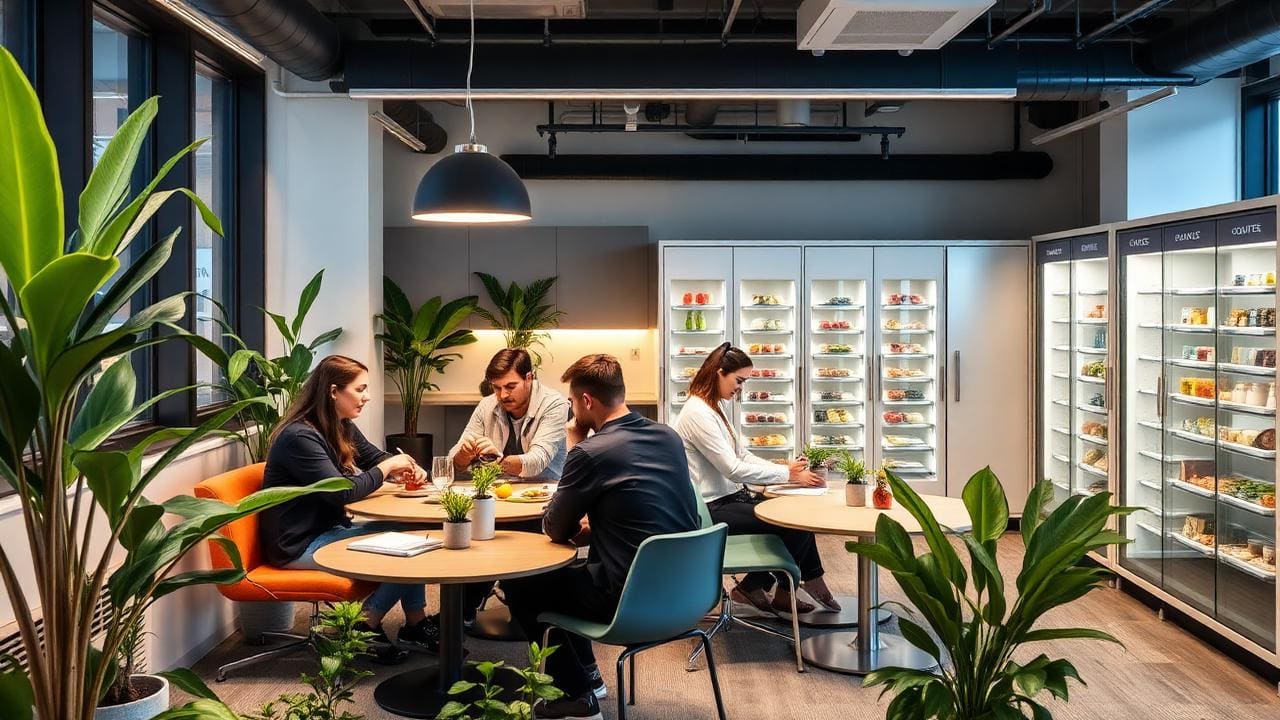
Office amenities work best when they address everyday needs. Food, flexibility and convenience are useful starting points. Assess what your employees value before deciding where to spend.
What does not work (despite the spend)
- Ping-pong tables, table football, video-game corners — check actual demand before investing
- Generic free snacks that everyone has at home anyway
- Mandates without infrastructure — attendance alone does not ensure a better working day
- Office-design refreshes without amenity infrastructure underneath
What actually moves attendance
- A real lunch offer — subsidised canteen, rotating street food, or a corporate food-ordering account with a meaningful daily allowance
- Late-shift food access — check local delivery hours and provide a secure lobby drop-off
- Convenience infrastructure — food lockers so employees can order lunch or dinner to work
- Quiet rooms and focus space — ask employees about their priorities
- Predictable peak-day attendance design — sized for Tuesday–Thursday, not Monday
Why food and delivery rank so high
Food removes the biggest daily friction of coming in (you didn't make lunch, the shops near the office are expensive, the canteen is mediocre). A reliable way to receive food orders at work is an infrastructure question, not a perk question.
What Foodie Locker contributes
A lobby bank of insulated lockers gives couriers from any food delivery service or local restaurant one defined drop point. Recipients collect with a one-time code when convenient, so reception handles fewer bags.
Sizing it for your headcount and peak days
Size compartments using measured peak-day delivery demand, collection times and available space. An office planning exercise should test different attendance patterns rather than rely on a fixed ratio.
See also: the pillar guide · three-days-a-week design.