
BREEAM, WELL and ESG: how amenity infrastructure scores on London lease renewals
Landlords and occupiers are quietly rewriting how office amenity counts toward BREEAM In-Use, WELL and ESG reporting. Here's where smart food and parcel infrastructure earns credits, lifts amenity scoring and shows up in lease-renewal conversations.
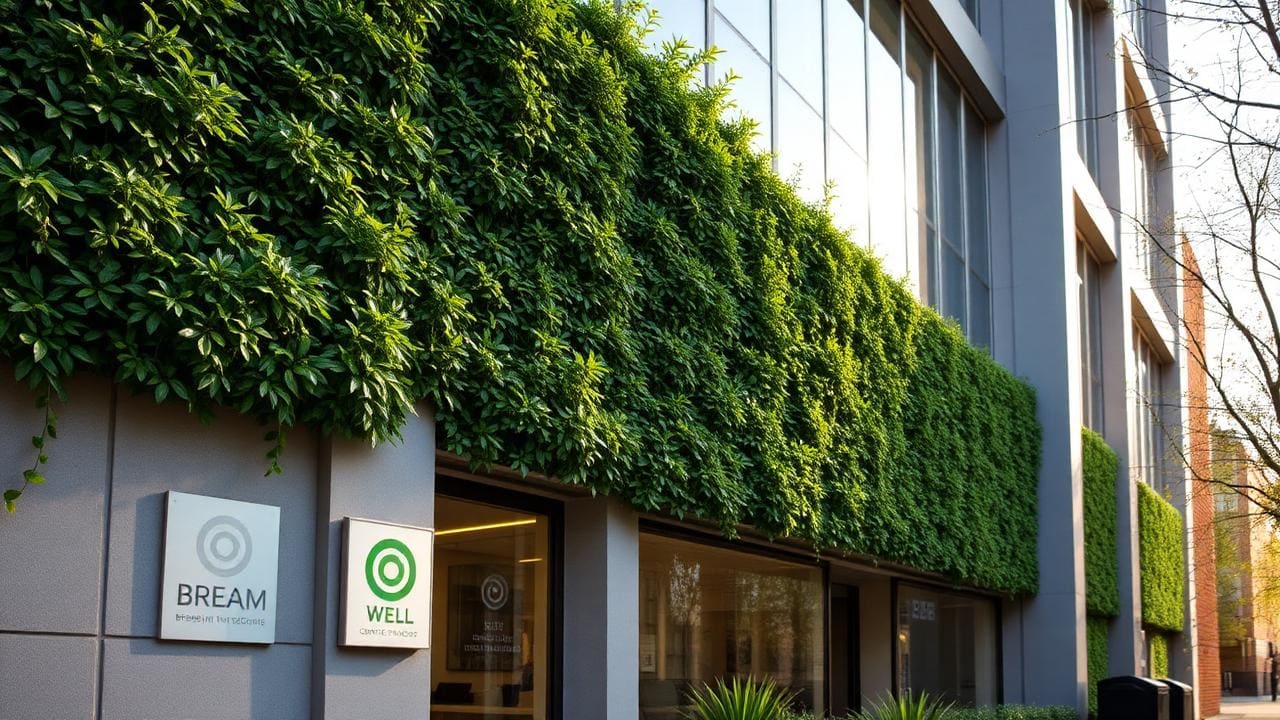
Landlords and occupiers are quietly rewriting how office amenity counts toward BREEAM In-Use, WELL and corporate ESG reporting. Smart food and parcel infrastructure is no longer just an operational convenience — done right, it earns credits, lifts amenity scoring, reduces failed-delivery emissions and shows up in lease-renewal conversations.
BREEAM In-Use
BREEAM In-Use scores existing buildings on Management, Health & Wellbeing, Energy, Transport, Resources, Water and Resilience. Smart food and parcel lockers contribute in two places: Health & Wellbeing (occupant amenity, food access, late-hours safety) and Transport (consolidated last-mile delivery, fewer failed-attempt redeliveries). Buildings re-certifying are increasingly using delivery-infrastructure evidence to nudge into a higher band.
WELL Building Standard
WELL focuses on occupant health. Food access (Nourishment concept), late-hours safety (Mind / Community), and the operational handling of food deliveries all map into WELL features. The 24/7 availability of hot, chilled and ambient food via a secure handoff point is exactly the kind of operational evidence WELL reviewers look for.
Corporate ESG and scope 3 emissions
Failed deliveries are a measurable scope-3 emissions line for major occupiers — every failed-attempt redelivery doubles the courier mileage. Lockers cut failed-attempt rates close to zero on parcels and to negligible levels on food (you collect because you're here). The data is auditable and shows up well in EPRA sBPR and SBTi reporting.
Lease-renewal conversations
Amenity is now priced into renewals in central London. Buildings with credible 24/7 delivery infrastructure and a clean front-of-house story command stronger rents and lower void rates. Foodie Locker installations show up in the amenity schedule alongside cycle storage, shower count and EV charging.
What evidence to capture
- Volume processed (orders per week, by category)
- Failed-attempt rate vs benchmark
- Estimated avoided courier miles and CO₂
- Reception-time hours saved
- Occupant satisfaction scoring (where surveyed)
Foodie Locker exports all of the above as standard reports — see the <a href="/solutions/integrations" className="text-primary underline underline-offset-2">Integrations Hub</a>.