
Apartment food delivery security: a building manager's playbook
A practical playbook for UK apartment, BTR and PBSA building managers to secure food delivery operations: courier access control, fire-door compliance, chain-of-custody, late-night safeguarding, audit logging and the policy template that turns the whole thing into a written control.
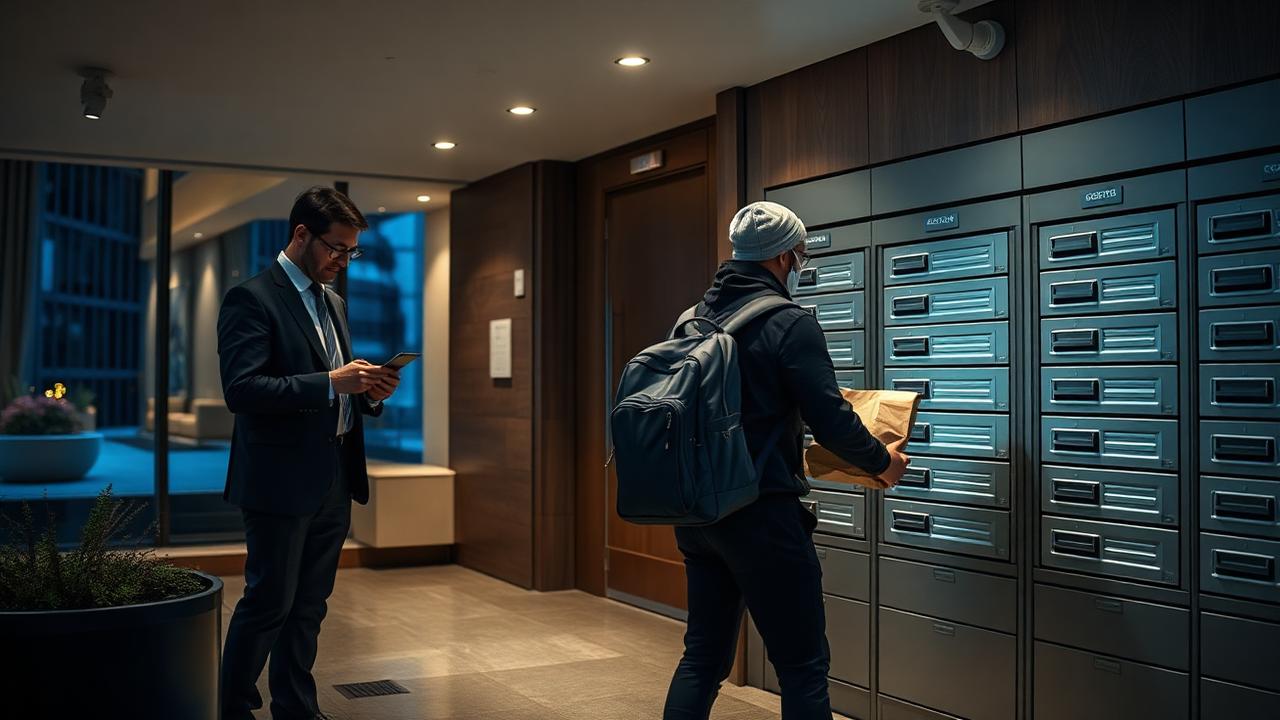
Food delivery is now the single largest uncontrolled flow of unknown people into UK apartment buildings. A mid-size BTR or PBSA scheme will admit more couriers in a single Friday evening than it admits contractors in a month — and almost none of them are vetted, logged or auditable. This playbook is what building managers actually need: a step-by-step security model that closes the gap without breaking the resident experience.
It's structured as a 10-step playbook plus a downloadable policy outline you can adapt for your own building. Each step is mapped to the specific risk it controls and the evidence it produces for an Accountable Person under the Building Safety Act 2022.
Why apartment food delivery is now a security issue, not an amenity issue
Five years ago, food delivery to apartment buildings was a low-volume convenience. Today the typical UK BTR or PBSA building sees 2–5 food and grocery deliveries per resident per week, concentrated between 6pm and 11pm. That's hundreds of unvetted couriers per week entering — or trying to enter — buildings designed for residents and guests, not for a continuous courier flow.
The threat model has shifted with the volume. Lobby food theft, propped fire doors, late-night doorstep exposure for lone residents, tailgating into corridors and refund disputes with no chain of custody are now the dominant operational risks in residential portfolios. None of them are caused by individual couriers behaving badly — they are caused by a building with no defined handover layer.
Step 1 — Audit your current delivery flow
Spend one Friday evening between 6pm and 11pm at the front door. Count couriers, log access method (intercom, tailgate, propped door, concierge), record dwell time, note where bags are left, and tally any incidents (mix-ups, complaints, missing bags). Most managers are surprised by the volume — and by how often fire doors are propped.
Output: a one-page baseline you can compare against after every change. This single document is also the starting evidence pack for any Building Safety Act conversation.
Step 2 — Write a one-page delivery policy
Without a written policy, your control evidence is whatever the concierge happened to do that shift. A one-page delivery policy fixes that. It should state: the designated drop point, the courier access route (or lack of one), the resident collection method, the out-of-hours rule, the fire-door rule, and the named person responsible for the policy.
This is the document an Accountable Person can put in front of the regulator. Without it, the building has no documented control on the largest single category of unknown people admitted.
Step 3 — Define a single designated drop zone
The most common failure mode in apartment delivery security is having no defined drop point — couriers leave bags wherever they can. The fix is structural: pick one location, register it with every major platform's business profile (Deliveroo, Uber Eats, Just Eat, Tesco Whoosh, Sainsbury's, Hop), and refuse drops anywhere else. Locker bank, secure cupboard, manned desk — the location matters less than the singularity.
Pin the lat/long. Geocoded drop points are the only way platform dispatch algorithms route couriers to the right place first time.
Step 4 — Eliminate courier admission to corridors
Every courier admitted past the perimeter creates risk: tailgating, propped doors, mistaken-apartment knocks at 11pm, and the late-night doorstep encounter that disproportionately affects lone female residents. The security objective is simple: couriers complete the drop without crossing the perimeter.
Mechanically this means either a perimeter-accessible locker bank, a vestibule with controlled access, or a manned drop counter that physically separates the courier flow from resident corridors. A locker bank is the only one of the three that works 24/7 without staffing.
Step 5 — Make every drop individually credentialed
Open lobby drops are a known theft pattern. Any control that ends with 'the courier leaves the bag and the resident picks it up later' fails without individual credentials. The handover must end in a locked compartment that only the named resident can open, with a one-time PIN, app code or QR.
This is also the line between a control that produces evidence and one that doesn't. Credentialed handovers generate a per-event audit log; uncredentialed ones generate nothing.
Step 6 — Log every drop and pickup
The single biggest operational saver in delivery security is the audit log. Every 'where's my food?' and every 'someone took my bag' becomes a 30-second lookup instead of a tri-party dispute between resident, platform and building. Logs should capture: timestamp, compartment, courier ID (where available), resident credential, and CCTV cross-reference.
Retention should match your wider building security policy — typically 30 days minimum, longer for incidents under active investigation. The log is also the primary control evidence for the Building Safety Act conversation in Step 10.
Step 7 — Plan for the 9pm–midnight peak
Friday and Saturday delivery peaks are when the security model is most tested and most likely to fail. Concierge cover is thin or absent, residents are tired and more likely to buzz couriers in without verification, and bags pile up in lobbies. The peak is also when late-night safeguarding exposure is highest — a single resident answering the door to an unknown person at 11pm is the highest-frequency safeguarding scenario most operators have.
The playbook answer is to ensure the perimeter handover model works without staff. If the system needs a concierge to function, it will fail at exactly the hour when concierge is least available.
Step 8 — Communicate the policy to residents
Security models fail when residents don't know what they are. A two-paragraph note in the welcome pack, a poster at the lift lobby, and a single line in every booking confirmation is enough. Tell residents: where to send couriers, how to collect, how to report a problem, and why the policy exists (their security, their food quality, the building's fire strategy).
Residents who understand the policy enforce it for you — they stop buzzing couriers in, stop propping doors and stop blaming the building when a courier leaves a bag in the wrong place.
Step 9 — Integrate with CCTV and access control
A delivery security layer should not sit alone. Wire the drop point's camera into the building CCTV, link locker events to the access-control timeline, and make sure the security desk (where there is one) can see live drops and pickups. The integration is what turns nine separate systems into one operational picture.
This is also the layer most likely to be missed in a retrofit. Specify it on day one — it costs nothing extra to wire in during install and costs significantly more to bolt on later.
Step 10 — Map the controls to the Building Safety Act 2022
In higher-risk residential buildings (HRRBs), the Accountable Person is responsible for managing safety risks from people admitted into the building. An undefined delivery handover is an enforcement risk. A written policy, a designated drop point, a perimeter handover, credentialed access and an immutable audit log are — together — the strongest documented control available for the courier-access risk category.
Package the playbook as your evidence pack: policy document, drop-zone diagram, audit log sample, CCTV integration note, resident communication. That pack is what you put in front of the regulator.
The integrated answer: a locker-based handover layer
All ten steps share one structural requirement — a 24/7, credentialed, audit-logged, perimeter-accessible drop point. A smart food locker bank is the only piece of infrastructure that delivers all four. Heated, ambient and chilled compartments protect food quality; PIN/app/SMS collection delivers credentialed access; the audit log is generated automatically; and external-access stations remove the need to ever admit a courier into the building.
Foodie Locker is the platform UK building managers install to make this playbook real. Hardware, software, courier onboarding and resident comms are all included.
Want the editable policy template and audit sample? Book a demo and we'll send the building-manager pack.