
Built-in age verification: how Foodie Locker can automate proof-of-ID for alcohol, energy drinks and age-restricted deliveries
When the building already knows who lives there — verified ID at move-in, age on file, biometrics at the locker — age verification stops being a courier's problem and becomes a one-tap experience. Here's how Foodie Locker's resident-data layer can automate compliance for alcohol, vapes, energy drinks and other age-restricted goods, in line with the Licensing Act 2003 and forthcoming UK rules.
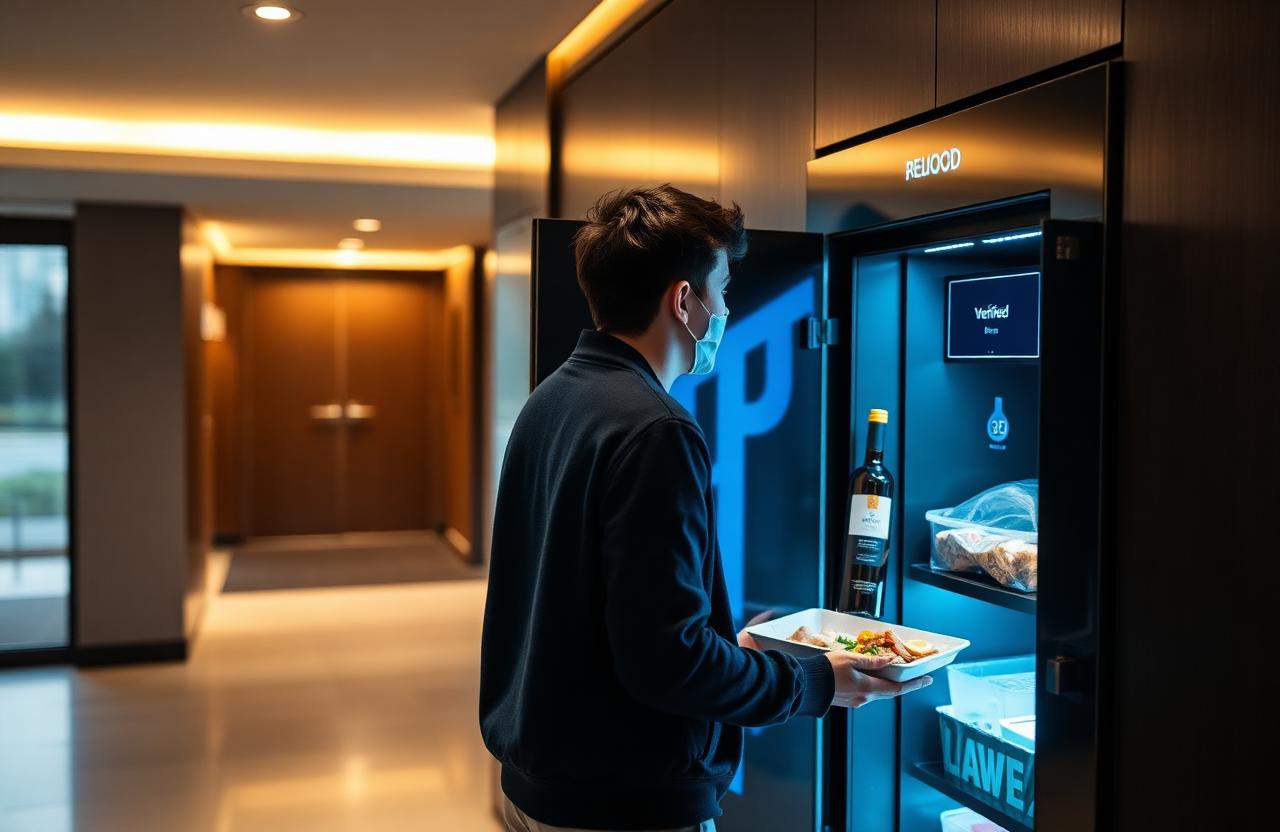
Buying alcohol, vapes, energy drinks or any age-restricted product online today depends on a courier eyeballing an ID at the door — when they remember to ask, when the resident is in, and when the resident hasn't sent a flatmate down to collect. It's the weakest link in an otherwise digital supply chain. Foodie Locker sits on top of something most courier networks don't have: a verified resident identity already on file. That changes what age verification can be.
This piece sets out where age verification breaks today, what Foodie Locker's resident-data layer can do about it, and the future state we're building toward — automated, audit-ready, and frictionless for the resident.
Why age verification is failing on the doorstep
Under the Licensing Act 2003 and Challenge 25, every alcohol delivery in the UK requires the seller to verify the recipient is over 18. In practice that obligation is pushed onto the courier — a gig worker juggling 30-minute drop windows, multi-storey buildings and customer ratings. Mystery-shopper studies routinely find ID-check failure rates of 20–40% on home delivery. Test purchases on energy drinks and vapes show the same pattern.
The same gap exists for over-the-counter medicines, knives, lottery products and (soon) the next generation of age-gated rules under the Tobacco and Vapes Bill. Every new restriction adds another doorstep judgement call to a workflow that was never designed for it.
What Foodie Locker buildings already know about residents
In a Foodie Locker building, the resident isn't an anonymous postcode. By the time they collect their first delivery, the building has already verified:
- Government-issued ID at move-in (driving licence, passport or BRP)
- Date of birth on the tenancy or licence agreement
- Verified phone number tied to the locker account
- A unique, single-tenant credential for the locker (PIN, app token or — on supported sites — biometric)
- An immutable audit trail of who has collected from which compartment, when
That's a stronger identity stack than any courier check at the door. Once it's connected to the locker collection flow, age verification stops being a doorstep judgement call and becomes a back-end policy decision.
How automated age verification works at the locker
The flow we're building toward is deliberately invisible to the resident. When an age-restricted item is dispatched, the retailer flags it. The locker platform checks the resident's verified date of birth on file and gates the compartment accordingly:
- Resident over the legal threshold → standard PIN, app or biometric collection. No additional friction.
- Resident under threshold or unverified → compartment refuses to release. Resident is prompted to complete a one-time ID upload via the app, or the order is returned to the retailer untouched.
- Shared household → only the verified account holder's credentials open the compartment. A flatmate's PIN won't work.
Every release event writes to the audit log: timestamp, compartment ID, resident ID, age check result, courier ID, retailer reference. That log is the evidence pack a Trading Standards officer or Designated Premises Supervisor would otherwise have to reconstruct from witness statements and CCTV.
Why this is safer than doorstep checks
Three reasons:
- Identity is verified once, properly, at move-in — not 30 seconds at a doorstep by a courier with a queue behind them.
- The decision is deterministic and logged. Every release is provable. Mystery shopping becomes a data query, not a field exercise.
- Substitution is eliminated. A 17-year-old can't collect on behalf of an 18-year-old flatmate because the credential is bound to the verified account holder.
It also removes the most uncomfortable part of the courier's job. Couriers don't want to be the last line of defence on UK alcohol law — they want to deliver and move on. Locker-side verification lets them do exactly that.
What it unlocks for retailers, operators and residents
For retailers: a route into apartment buildings that doesn't expose them to compliance risk. Tesco Whoosh, Sainsbury's Chop Chop, Deliveroo Hop, Joybuy and the major spirits brands all face the same doorstep-check problem. A locker that returns a verified compliance event removes a meaningful chunk of legal and reputational exposure.
For operators: a new category of inbound delivery (alcohol, vapes, OTC pharmacy) handled with the same audit standard as parcels and food — and a defensible position if a regulator ever asks how age-restricted goods are managed in your building.
For residents: the order arrives, the locker opens, and that's the end of it. No standing at the door with a passport. No missed delivery because they were on a Zoom call when the courier knocked.
Where this fits in the Foodie Locker roadmap
The infrastructure is already in place. Verified resident identity, single-tenant credentials, immutable audit logs and retailer integrations are how the platform works today. Age-gating is the next layer — a policy module that sits on top of the existing collection flow and exposes a verification API to retailer partners.
We see this becoming a default capability across BTR, PBSA, Co-Living and Hotel deployments through 2026 and 2027 — particularly as the Tobacco and Vapes Bill, online sales rules and any future single-use vape and high-caffeine restrictions push more responsibility onto the digital supply chain.
If you're a retailer, operator or local authority thinking about how age-restricted online delivery will work in residential buildings over the next five years, we'd like to talk. See <a href="/products/food-lockers-hardware" className="text-primary underline underline-offset-2">Food Locker Hardware</a> and <a href="/integrations" className="text-primary underline underline-offset-2">Integrations</a> for the underlying platform, or <a href="/contact" className="text-primary underline underline-offset-2">book a demo</a>.