
The 7 challenges of apartment food delivery — and how UK operators are solving them
Food delivery has become the single biggest operational pressure in UK apartment lobbies. Here are the seven challenges every BTR, PBSA and leasehold operator is facing in 2026 — and the playbook the leading operators are using to solve them.
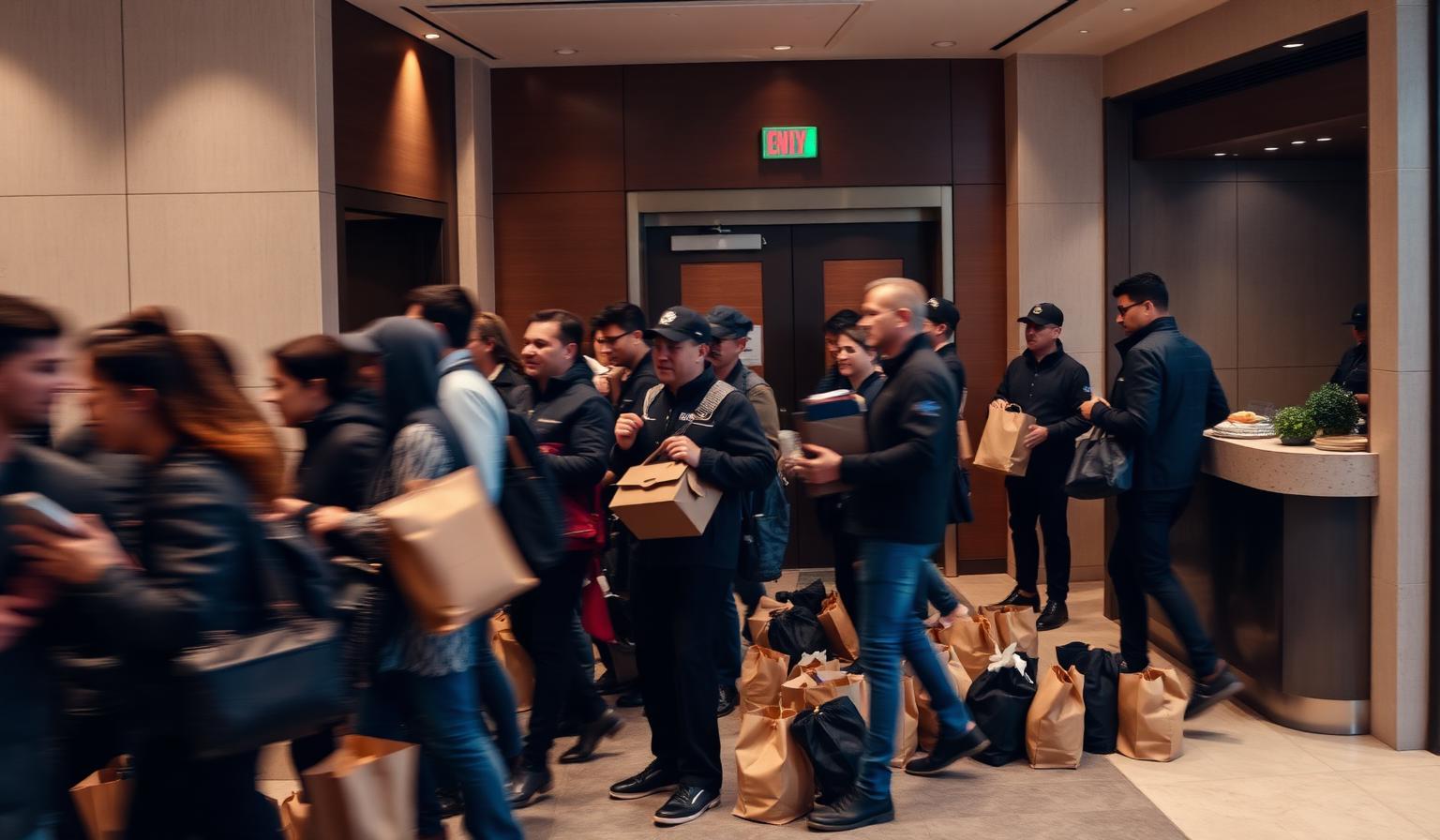
Food delivery is now the single biggest operational pressure in UK apartment lobbies — bigger than parcels, bigger than visitor management, bigger than maintenance. Every UK BTR, PBSA, co-living and leasehold operator is facing the same seven challenges in 2026. This is the playbook the leading operators are using to solve them.
Challenge 1 — Lobby congestion at peak meal times
38% of weekly food deliveries into UK apartment buildings land between 18:00 and 21:00. That's the same window residents are returning from work, friends are buzzing for entry and concierge are trying to run handover. In a 200-unit scheme, peak hour can see 30–50 couriers cycle through the lobby in three hours.
Solution: a perimeter-accessible smart food locker bank that takes the courier interaction out of the lobby entirely. Couriers drop at the perimeter; residents collect via PIN. Peak-hour lobby traffic from couriers drops by 90%+.
Challenge 2 — Cold food and resident complaints
The single most common food-delivery complaint UK building managers hear is 'my food was cold'. Root cause is almost always the same: a Deliveroo bag sat on the lobby counter or behind the concierge desk for 15–30 minutes before the resident was reached.
Solution: heated food-locker compartments at 63–75°C hot-hold combined with instant resident notification. Average courier-to-resident handover time drops from 8–15 minutes to under 60 seconds. Cold-food complaints fall 70–80% in the 90 days post-install.
Challenge 3 — Building Safety Act exposure from courier behaviour
Propped fire doors, tailgating, late-night buzzing, unsupervised couriers in common parts — every one of these is a Building Safety Act-relevant incident, and every one is overwhelmingly driven by food courier behaviour. 62% of UK apartment buildings log at least one propped fire door per week caused by a courier.
Solution: perimeter handover removes the reason couriers ever need to enter. Combined with concierge briefing, intercom rules and a written delivery policy in the resident handbook, this is the single biggest structural Building Safety Act improvement most operators can make to a delivery-heavy lobby.
Challenge 4 — Concierge workload sink
30–45% of UK concierge daytime hours are spent on food and grocery delivery triage. That's the largest single line of the largest single service-charge cost in the building, spent on a task residents don't actually grade. Residents grade outcomes — hot food, calm lobby, fast response at 11pm — not the concierge being heroic about a Deliveroo bag.
Solution: route every food delivery through the locker layer by default. The concierge role moves from delivery triage to resident service. The buildings that have made this move consistently report higher resident NPS at lower fully-loaded concierge cost.
Challenge 5 — Lost, stolen and mis-delivered orders
'Where's my food?' is the single most common after-hours concierge enquiry in UK apartment blocks. Without a logged handover, every dispute becomes a manual investigation: which courier, which platform, when, what bag. Most disputes end with the building absorbing the cost as a goodwill refund.
Solution: PIN-based collection with camera audit on every drop and pickup. Every order is logged with chain of custody. Disputes drop 80%+ because the audit trail is unambiguous and exportable.
Challenge 6 — Late-night and out-of-hours deliveries
UK food delivery is increasingly a late-night activity — 23:00–02:00 volume has grown faster than any other window for three consecutive years. Late-night deliveries are also the highest-risk window for buzzing-apartment disputes, tailgating and lobby incidents, because concierge cover is typically lighter or absent.
Solution: 24/7 smart-locker handover plus intercom rules that disable courier door-release between 23:00 and 07:00. Late-night incidents drop sharply with no impact on residents' ability to receive food.
Challenge 7 — Visibility and reporting for operators and owners
Most operators cannot tell their owner or asset manager how much food delivery their building is handling, what it costs to run, or how it's trending. That makes the case for infrastructure investment harder than it should be.
Solution: the locker layer becomes the reporting layer. Volume, peak hours, dwell times, exception rates, complaint volume and operator cost are all logged and exportable. Operators move from a defensive 'we're coping' position to a proactive 'here's what we measured, here's what we changed, here's the result' conversation with ownership.
The shape of the solution
Every leading UK BTR, PBSA, co-living and leasehold operator solving these seven challenges in 2026 is converging on the same architecture: a perimeter-accessible smart food locker bank with heated, ambient and chilled compartments, registered as the official delivery address on every major platform, integrated with the building's resident app and PMS, and backed by a written delivery policy in the resident handbook. The hardware solves four of the seven challenges directly. The policy and integration solve the other three.
See how Foodie Locker delivers all seven, or book a 15-minute demo.