How the rise of dark stores and 15-minute grocery is rewriting residential delivery
The big Friday-night Tesco van has been replaced by 4–6 small drops a week from dark stores and quick-commerce platforms. Here's how the supermarket operating model has flipped to little-and-often, why it breaks lobbies designed for the old world, and what 'fit-for-purpose' looks like for BTR, PBSA and co-living buildings in 2026.
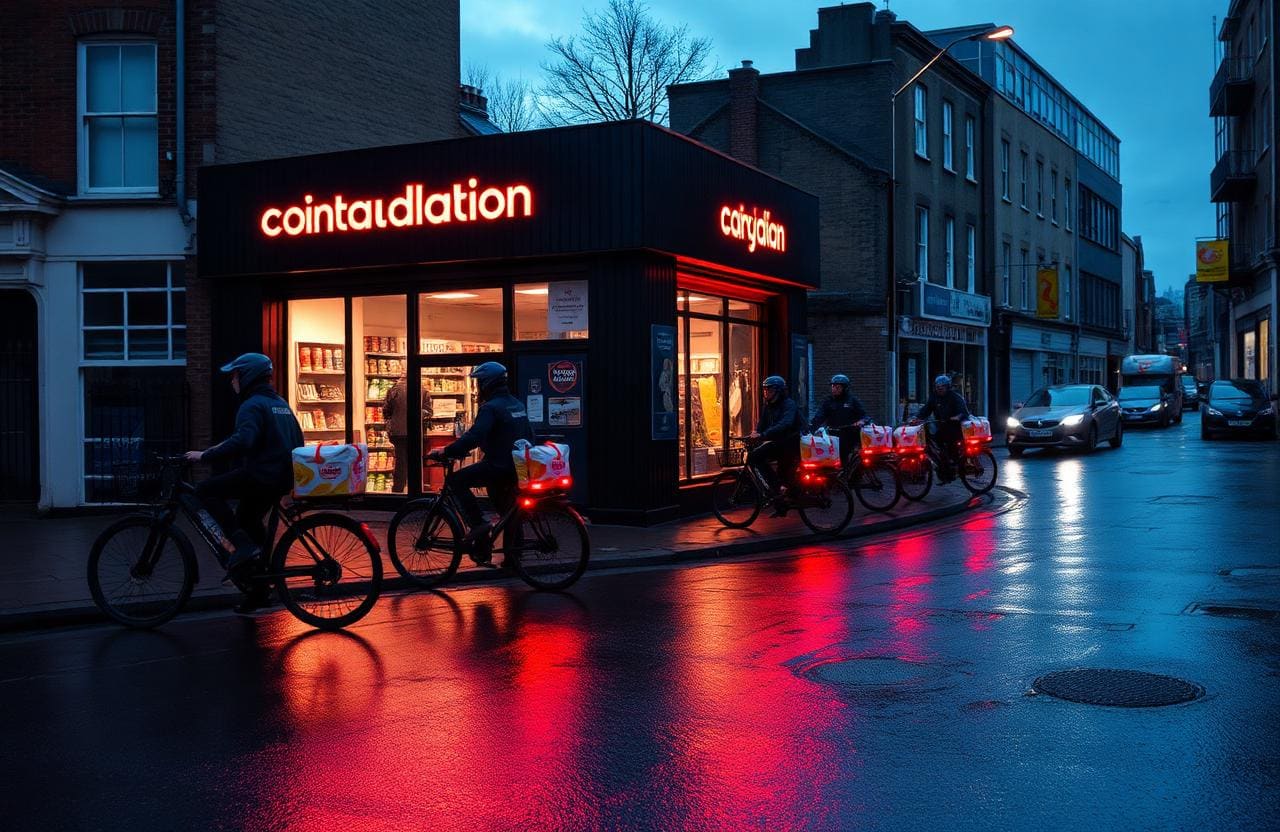
The British weekly shop is over. The big Friday-night Tesco delivery van — four crates wheeled up to the 13th floor while the lift is held open — has been quietly displaced by something completely different: 4 to 6 small grocery drops a week, ordered on a phone, picked from a dark store, and ridden to the building by a courier on an e-bike.
This is a shift in operating model, not just a shift in consumer habit. Tesco Whoosh, Sainsbury's Chop Chop, Deliveroo Hop, Asda Express, Co-op On Demand, Joybuy and a long tail of dark-store and quick-commerce brands have rebuilt the supermarket around a 1–2 mile delivery radius, a 15–30 minute promise and a basket size of around £15. And the buildings receiving those deliveries — BTR, PBSA, co-living, mixed-use — were never designed for it.
From one big shop to many small ones
The old model assumed planning. A weekly grocery list, a scheduled van slot, a single delivery window the household built around. The new model assumes the opposite: order what you need, when you need it, and have it in your kitchen before you've finished cooking the rest of the meal.
That change is structural. ONS and Kantar data show online grocery share has stabilised at around 11% of the UK market, but inside that share the mix has flipped. Scheduled big-basket orders are flat. Quick-commerce and 'top-up' orders are growing at double-digit rates year on year, particularly among under-35s in dense urban postcodes — exactly the demographics living in modern residential schemes.
Dark stores: the new supermarket footprint
The infrastructure powering this shift looks nothing like a Tesco Extra. Dark stores are 3,000–10,000 sq ft units tucked into railway arches, retail-park back lots and converted high-street shops. No customers, no aisles, no checkouts — just shelving optimised for picking speed, a small team of pickers, and a permanent crew of waiting riders.
Tesco operates Whoosh from the back of more than 1,500 existing stores. Sainsbury's runs Chop Chop from in-store hubs in around 250 locations. Deliveroo Hop, Joybuy and the surviving European q-commerce brands run dedicated dark stores. The result: in any reasonably dense UK postcode, a resident is now within a 15-minute ride of three to five fulfilment points, each promising sub-30-minute delivery on roughly 2,000–4,000 SKUs.
The consequence for residential buildings is a step-change in delivery density. A scheme that used to receive 50 grocery vans a week now receives 200–300 individual rider drops — same total volume of food, four to six times the door events.
Why this breaks the lobby
Buildings designed in the last decade still planned for the old model. The bin store, the parcel room and the receptionist between them could absorb a few scheduled van slots a day. They cannot absorb the new traffic pattern:
- Drops are unscheduled — a courier can arrive at any minute between 7am and 11pm
- Each drop is small, perishable, and time-critical (frozen items, ice cream, chilled meals)
- Couriers are on a 12-minute delivery promise — they will not wait at the door
- Many residents are at work, in meetings or unavailable to answer the buzzer in the moment
- The receiving infrastructure (concierge, parcel room) was sized for a different era
The visible symptom is congestion: riders parked on pavements, food bags stacked behind reception, fire doors propped open, 'sorry we missed you' cards multiplying on noticeboards. The underlying problem is that the operating model of grocery has changed faster than the operating model of the building.
What's actually driving the change
Three forces, stacked:
- Demographics — under-35 urban renters order groceries by app at roughly 4× the rate of over-55 households. The same demographic dominates BTR and PBSA occupancy.
- Convenience economics — a £4 quick-commerce delivery fee is now cheaper, in time terms, than a 25-minute round trip to the nearest convenience store. Once the maths works, behaviour switches.
- Supermarket survival — every major UK grocer now has a quick-commerce product because the alternative is ceding the top-up basket entirely to Deliveroo, Just Eat and Uber. They will keep investing.
None of these forces are reversing. The little-and-often pattern is the new baseline, and it will keep growing as the under-35 cohort moves up the housing ladder and brings the behaviour with it.
What 'fit-for-purpose' looks like in 2026
A building set up for the new grocery model has three things the old model didn't need:
- Chilled and ambient locker capacity sized for 4–6 drops per resident per week, not one. Chilled compartments are non-negotiable for fresh and frozen.
- A standing handover address that every quick-commerce platform routes to automatically — not a buzzer instruction in a delivery note that nobody reads.
- A short courier-side workflow (assign compartment, drop, scan, leave) that respects the 12-minute delivery promise and keeps riders out of fire-rated corridors.
The buildings already running this way report the same outcomes: failed-delivery rates near zero on grocery, lobby footfall back to pre-Deliveroo levels, concierge time refocused on residents instead of bags, and a measurable reduction in the courier-mileage emissions that GRESB and SBTi reporting now ask about.
What it means for operators, developers and asset managers
If you are spec'ing a new BTR, PBSA or co-living scheme, the planning assumption is no longer 'we will receive parcels and the occasional Tesco van'. It is 'we will receive 200–300 rider drops a week per 100 units, half of them chilled, all of them on a 12-minute promise.' That changes ground-floor plan, M&E load, fire strategy and operational headcount.
If you are operating an existing scheme, the question is narrower: how do you absorb the new volume without adding concierge headcount or compromising the front door? Chilled smart-locker infrastructure is the answer most premium operators have already landed on.
For more on the underlying shift see <a href="/blog/grocery-quick-commerce-residential-buildings-whoosh-hop-joybuy" className="text-primary underline underline-offset-2">The quiet rise of grocery-by-app</a> and <a href="/solutions/grocery-and-meal-kits" className="text-primary underline underline-offset-2">Grocery & Meal Kits</a>. To talk through what this means for a specific building, <a href="/contact" className="text-primary underline underline-offset-2">book a demo</a>.